#3 Favorite
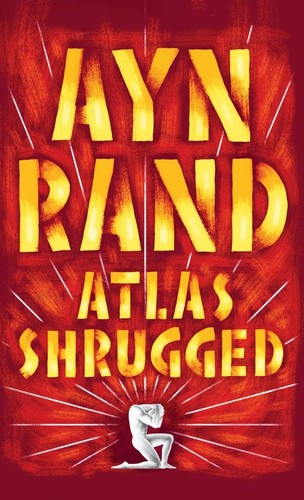
Atlas Shrugged
My first real job out of school was in Product Innovation at ZF in Lafayette, Indiana. My boss, Dan Williams, was a big reader, so one day I asked him for book recommendations. He smiled and said Atlas Shrugged. I was confused at first. Why only one book? Then I saw the size of Atlas Shrugged and understood. It is over 1,000 pages long and the book’s most famous monologue (the John Galt speech) is something like 70 pages on its own. This is not a casual read, it’s a real commitment.
I do not usually read fiction. I used to think it had less to offer than nonfiction because none of it actually happened. Atlas Shrugged changed how I think about fiction. The value of fiction, I realized, is not in whether the events happened. It is in whether the ideas in the story sharpen the way you see the world. By that measure this book delivers more than most nonfiction I have read.
Some context on Ayn Rand matters here. She was born in Russia in 1905 and emigrated to the United States in 1926. She witnessed the Russian Revolution and what happened to her family and her country under early Soviet rule firsthand. That background matters because the hostility to collectivism that drives the whole book is not an abstract philosophical position. It is a response to having watched a real political ideology destroy real lives. Whether or not you agree with where she lands, the urgency in her writing is earned.
The biggest impact for me was how seriously Rand treats individual responsibility. If you want to feel in control of your life and make an impact on the world, you have to take ownership of both the good and the bad of what you do. Equally important is to not blame other people, society, or the government for your shortcomings. Rand even frames productive work, building things, and solving problems as a moral act. Productivity is not just useful, it is the way humans express what is best about being human.
She also pushes a more uncomfortable idea: that people should be judged, and even loved, based on the value they add and not out of obligation or proximity. That one stuck with me more than I expected. After all, who actually wants to be loved out of obligation? The argument is that love and respect mean more when they are earned based on who someone is and what they do, rather than given as a default because of family ties or shared geography. It is a hard pill to swallow if you are wired toward unconditional love as a virtue, but it forces you to ask whether unconditional love is always actually a virtue or just a more comfortable default.
Most of the book builds outward from there. Rand has a deep frustration with the idea that anyone is entitled to what someone else built or earned. She does not treat that entitlement as a minor character flaw, but as a kind of moral corruption. The people in the novel who live off the output of others without contributing, the ones her characters quietly call “looters,” are not just free riders, but rather they are the antagonists of the entire novel. Rand’s argument is that a society that increasingly empowers looters at the expense of producers is a society that is quietly destroying its own foundation.
The central thought experiment is hard to ignore. What happens when the people who actually build and run things decide to stop? When competence withdraws? The whole novel rests on the idea that a system can quietly depend on a small group of highly productive people, and that most systems never notice until those people are gone. The book’s plot is basically that mystery slowly revealing itself. Productive people across society start disappearing, and the country starts to fall apart, and nobody connects the two until it is almost too late.
The common criticisms are fair. The characters can feel one-dimensional, especially the villains. The plot strains credibility at points. The speeches go on much, much longer than they need to. At times it reads less like a novel and more like a philosophy lecture with a story wrapped around it. John Galt’s 70 page radio speech is probably the most famous example, and most readers either skim it or treat it as the philosophical core of the book disguised as fiction.
But that is also why it works. The message is impossible to miss, and hard to fully dismiss, even when you disagree with parts of it. Rand was not trying to write a subtle, ambiguous novel where the reader is left to draw their own conclusions. She was trying to write a philosophical manifesto in the form of a story, and she succeeded by sheer force of will and an absolute refusal to be subtle. You finish the book knowing exactly what she wanted you to believe.
This book might be the reason I love Switzerland so much. A country that emphasizes individual responsibility, productivity, and a culture that rewards competence rather than punishing it tends to look pretty good through a post-Rand lens. I do not agree with every conclusion Rand draws though. The most extreme versions of her philosophy slide toward an indifference to human suffering that I think is genuinely wrong. But the core insight, that individual responsibility and productive work are central to a meaningful life, is one I keep coming back to.
I would definitely recommend reading this book at least once, even just to wrestle with the ideas. It genuinely changed how I think about responsibility, work, and what people owe each other. This is one of the rare books you read that geniuinely changes you.
And yeah. Who is John Galt?