#16 Favorite
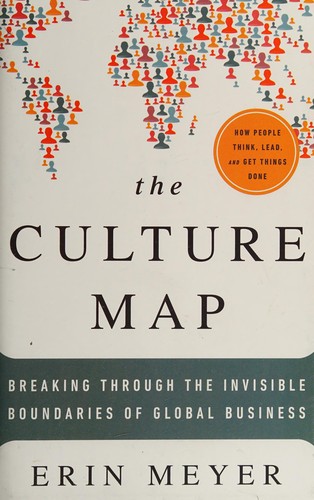
The Culture Map: Breaking Through the Invisible Boundaries of Global Business
I saw this book recommended on LinkedIn and figured it was worth a read given I work with a lot of diverse people and love to travel. The Culture Map by Erin Meyer is a guide to understanding how culture shapes the way people communicate, give feedback, build trust, make decisions, and disagree. Meyer is a professor at INSEAD, and the book is built around eight scales that map how different cultures handle different parts of business and communication. The visuals are honestly one of my favorite parts. She gives you a clean chart for each scale showing where different countries fall, and you can immediately see why a Dutch colleague might come across as rude to an American or why a Japanese manager might think their American counterpart is being childish.
A lot of what makes the book fun are the specific examples. One that stuck with me was the difference between countries like the Netherlands and most of the rest of the world when it comes to hierarchy. Dutch companies tend to make their organizations as flat as possible. Decisions are made by debate and consensus, and employees challenge their bosses openly. In a place like China or Japan, that same behavior would be seen as disrespectful and out of line. Meyer tells a similar story of a Danish CEO who rode his bike to work, which in Denmark is seen as humble and admirable, the boss being just one of the crowd. Yet the same behavior in China would be embarrassing for the company, because the boss is expected to look the part. The same action with a completely different signal.
Another section I loved was on giving feedback. Americans are generally direct communicators, but when it comes to negative feedback we get weirdly soft. We wrap the criticism in compliments. We start with what is going well, then mention the issue, then end on a positive note. Meyer calls this the feedback sandwich, and we are practically the world champions of it. The French, on the other hand, criticize passionately and give positive feedback sparingly. To a French colleague, the American sandwich feels dishonest. To an American, a French performance review feels brutal. She gives the example of a French employee who got what felt to her like a great review from her American boss but completely missed that the boss was actually trying to tell her she was about to be fired. The positives were doing all the talking and the criticism got lost in the wrapping.
The feedback chapter also made me think about how the French handle disagreement in general. Meyer talks about how in France you can have a heated, almost hostile debate with someone over something controversial and then go right back to being friends the next minute. Disagreement for them is not personal but rather a sign that you respect the other person enough to engage seriously with their ideas. In a lot of other cultures, including the United States, that same level of intensity in a debate would be read as a relationship-ending fight. It is a useful thing to know if you have ever felt blindsided by how heated a conversation got with a foreign colleague and assumed something was deeply wrong.
Another scale I found really interesting was about how different cultures persuade. Germans tend to want to see the derivation before the conclusion. They want to understand why the answer is the answer, walking through the reasoning step by step before getting to the recommendation. Americans are the opposite. We want the conclusion up front and the reasoning only if we ask for it. A German consultant pitching to an American boardroom and burying the recommendation under thirty slides of reasoning is going to lose the room before they ever get there. An American pitching the same thing to a German boardroom and leading with the recommendation is going to look unprepared and shallow.
This book is full of examples like this and the practical value is real. If you work with people from other countries, you will probably find yourself recognizing situations you have been in and wishing you had this map years ago.
What I keep coming back to though is the bigger question of where these cultural patterns come from in the first place. Meyer mostly describes the patterns. She does not spend a ton of time on why they exist. This is where I think Why Nations Fail by Daron Acemoglu and James Robinson, a book about how political and economic institutions shape the trajectory of countries, is a really useful companion read. People often attribute things to “culture” as if culture just appears out of nowhere, but I think culture is greatly influenced by political institutions. Americans are blunt communicators in part because the United States has the strongest free speech protections in the world. You can say almost anything without fear of legal consequence, and over generations that shapes how people talk. China’s more indirect style developed under thousands of years of hierarchical political institutions where saying the wrong thing to the wrong person could literally get you killed. Of course people in China learned to read between the lines.
You can run the same logic on the trust dimension. Americans tend to be more transactional in business and lean on contracts. Brazilians tend to invest more time in personal relationships before doing business. Why? Part of it is probably that contract law in the United States is strong and consistently enforced. If you sign something here, it is likely to hold up. In a country where the legal system is slower or less reliable, your real protection is knowing the character of the person you are doing business with. You build the relationship first because the relationship is the contract. The cultural difference is real, but the root cause is institutional.
The eighth scale in the book is about scheduling, and this one is maybe the clearest example of the pattern. Meyer describes how countries like Germany, Switzerland, and Japan have what she calls linear-time cultures. Time is treated as sequential, deadlines are firm, and being late by even a few minutes can signal disrespect. Countries like Nigeria, Saudi Arabia, India, and Brazil have what she calls flexible-time cultures. Time is treated as fluid, schedules are loose, and showing up thirty or forty five minutes late to a meeting is normal. One of the examples that stuck with me was a Nigerian businessman who pushed back on the idea that flexible-time cultures are somehow less organized. How is this Nigerian man supposed to plan months in advance when the government could declare a public holiday at a moment’s notice, when the power could go out for three days, when the road to work could flood, or when nothing about the infrastructure is reliable? You learn to plan loosely in places like Nigeria because rigid planning can get scrapped at a moment’s notice. The cultural pattern looks like a personality trait at the individual level, but at the country level it is a rational adaptation to political and infrastructural instability. Countries with stable institutions can afford linear time. Countries without them have to be flexible to survive.
I do not think Meyer would necessarily disagree with this. She just wrote a different book. The Culture Map is a field guide for navigating differences in real time. Why Nations Fail is an explanation for why those differences exist in the first place. I’d recommend reading them together, they make each other better. One gives you the map while the other tells you why the terrain looks the way it does.
My takeaway is this: culture is real and it matters, especially in any kind of cross-cultural work. But culture is not magic, and it is not destiny. It is the long-running output of the political, legal, and economic institutions a society has lived under. And a person’s culture certainly does not define them. Plenty of Americans are indirect communicators just as many Nigerians follow linear time schedules. If you want to work effectively across cultures, The Culture Map will give you the tools to do it. If you want to understand why those differences exist in the first place, you need to look at the history and institutions underneath them. Either way, the next time you find yourself frustrated with a colleague from a different country, it is worth asking whether the problem is really them, or whether the two of you are just operating on different expectations that neither of you chose. The fastest way to work better across cultures is to stop assuming yours is the default.