#8 Favorite
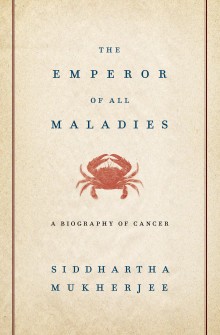
The Emperor of All Maladies: A Biography of Cancer
Another great read by Siddhartha Mukherjee. After loving The Gene, I picked this one up wanting to see how he would tackle cancer, and he does not disappoint. The Emperor of All Maladies won a Pulitzer in 2011, and you can see why. It is part history, part science, part memoir from his time as an oncology fellow, and it reads like a story even though the subject is one of the heaviest you can imagine.
One of the first things Mukherjee makes you realize is that cancer was not always the looming threat it is today. A hundred years ago the average American lived to about 57. Today it is closer to 78. People often died of infection, childbirth, or accidents long before cancer would have had a chance to find them. Hot take, but it is kind of a privilege that we live long enough to die of cancer in the first place. Cancer is mostly a disease of aging, and we are now in an era where we live long enough to actually meet it.
The early chapters are full of stories about how confused humans were about what cancer even is. One that stuck with me was the chimney sweep story. In 18th century London, young orphan boys were forced to climb naked up narrow, sooty chimneys, and surgeons started noticing that many of them developed scrotal cancer as they grew up. The medical establishment of the time assumed it must be a sexually transmitted disease, since the cancer only appeared after puberty. It took a surgeon named Percivall Pott in 1775 to make the connection that it was the soot itself causing the cancer. Pott’s observation became one of the first known links between an environmental exposure and a specific cancer, and it eventually helped push child labor reform in England. I have a friend who works in pediatric oncology, and one thing she has noticed is that most of her patients come from poor or disadvantaged backgrounds. Reading about the chimney sweeps made me think about how that pattern may not have changed as much as we would hope. The kids most at risk are still usually the kids with the toughest circumstances.
That theme of misunderstanding the disease runs through the next several centuries, and one of the most chilling figures in the book is William Halsted, the surgeon at Johns Hopkins who normalized the radical mastectomy in the late 1800s. Halsted believed that the more tissue you removed, the better the outcome, so he kept making his surgeries more and more extreme, eventually carving out muscle, ribs, and tissue down to the chest wall. The problem is that he never really accepted the difference between local and metastatic cancer. European researchers were starting to show that less aggressive surgery worked just as well for many patients, but Halsted refused to engage with their work. By that point his name carried so much weight in American medicine that disagreeing with him was career suicide. The radical mastectomy stayed the standard of care in the United States for decades, long after the European data had made clear that it was overkill, in part because Halsted had built his entire reputation on it and an entire generation of surgeons had been trained in his image. His life’s work depended on the procedure being right, and the field bent around that. It is yet another conflict of ego and power dressed up as medicine. Halsted is also the guy who normalized 36 hour straight shifts for medical residents, a system we are still recovering from today. And here is the wild part: while he was building his reputation as the most disciplined surgeon in America, he was secretly addicted to cocaine and morphine. He had originally gotten hooked on cocaine while researching its use as a local anesthetic, then tried to wean himself off using morphine, and ended up addicted to both for the rest of his life. The father of American surgery was high through most of his career, and the entire medical field bent to fit his beliefs about how to treat cancer.
After Halsted, the book gives more hope to the fight against cancer when describing Sidney Farber and his antifolates. In 1947, Farber was a pathologist at Children’s Hospital in Boston working on childhood leukemia, which was basically a death sentence at the time. He had a hunch that if folic acid helped cells grow, then a drug that blocked folic acid might slow leukemia cells down. He used a compound called aminopterin and induced the first ever real remissions in children with acute leukemia. Most of his patients still died and the remissions were temporary, but for the first time the disease was responding to a drug instead of just running its course. Up until then, the entire approach to cancer had been to cut it out with surgery or burn it out with radiation. Farber proved that you could attack cancer with a drug, from inside the body, in a way that targeted the cancer’s own biology. It was the first real hunch about how to actually beat cancer rather than just hack at it, and it opened the door to the modern era of chemotherapy. Farber is now considered the father of chemotherapy, and Dana-Farber Cancer Institute is named after him.
That hunch got pushed even further by a doctor named Min Chiu Li at the National Cancer Institute in the 1950s. Li was treating women with choriocarcinoma, a placental cancer that was almost always fatal. He had a hunch that he could use the levels of a hormone called hcg in the blood as a fingerprint for the cancer, even when the tumors were no longer visible. So he kept treating his patients with methotrexate even after their tumors had disappeared, until the hcg level hit zero. The other doctors thought he was causing unnecessary harm, dosing patients who looked cured with toxic chemotherapy just to chase a number. The NCI fired him in 1957. The crazy part is that he was right. The patients he treated his way actually stayed cured, while patients who stopped treatment when the tumors disappeared often relapsed and died. He had figured out that a visible tumor is just the tip of the iceberg and that you have to keep treating until the last cancer cells are gone, even the ones you cannot see. He had also invented the idea of using a biomarker in the blood to track cancer, which is now a foundational concept in oncology. He eventually won the Lasker Prize in 1972, fifteen years after being run out of the NCI. The medical field had to catch up to him, and a lot of women died in the meantime because his ideas were rejected too soon.
By the 1960s, surgery, chemotherapy, and biomarkers had each given doctors real footholds against cancer. But the war on cancer that followed in the 1970s was, to much of our dismay, a bit of a failure. The push for the war on cancer was driven largely by a New York philanthropist named Mary Lasker, who had lost loved ones to the disease and used her wealth, her connections, and her access to politicians and the press to make cancer a national priority. She teamed up with Sidney Farber to lobby Congress and ran a full media campaign with a famous “Ask Ann Landers” column, full page ads in the New York Times, and direct pressure on the White House. Their argument was simple. If we could put a man on the moon, we could cure cancer. Nixon signed the National Cancer Act in 1971, and by the next year Lasker was openly calling for a cure by 1976. The problem was that the basic science was nowhere near ready. Scientists were still figuring out what cancer even was at the cellular level, and pouring billions of dollars into curing a disease you do not yet understand is a bit like declaring war on an enemy you cannot see. There were real wins along the way, especially in childhood leukemia, but most of the early progress came from guess and check rather than from any deep understanding of the disease. The real breakthroughs only came later, once researchers stopped trying to attack cancer with bigger and bigger doses and figured out that cancer is fundamentally a disease of mutated genes that hijack the cell’s own growth machinery. Once that was understood, targeted therapies like Gleevec for chronic myeloid leukemia became possible. Knowledge moved the needle in a way that brute force never had. Lasker’s heart was in the right place, but her impatience set the field up to overpromise and underdeliver, and the public lost faith for a generation as a result.
After reading the book, my own takeaway is this. The progress we have made in fighting cancer is real and worth celebrating, but it has come slower and more painfully than the public usually understands. Even with all the progress in chemotherapy, radiation, immunotherapy, and targeted drugs, the best cure for cancer is still prevention. Pott figured this out in 1775 with the chimney sweeps. Get the soot off the boys and they do not get scrotal cancer. The same logic still holds today. Quitting smoking, wearing sunscreen, limiting alcohol, vaccinating against HPV, screening early, eating well, moving your body, and reducing exposure to known carcinogens prevent more cancer than any drug we have ever invented. Treatment is what we need when prevention fails, and we should keep getting better at it, but the cancer that never starts is the cancer that never has to be cured. What makes The Emperor of All Maladies great is that it does not flinch from any of this. Mukherjee shows you the wins and the losses, the heroes and the people the system got wrong, and the patients who lived through it all. If you have been touched by cancer in any way, or if you are just curious about how medicine actually moves forward, I would highly recommend it. Mukherjee calls this a biography of cancer, and that is exactly what it reads like. By the end, you feel like you actually know the disease, not just the headlines about it.