#10 Favorite
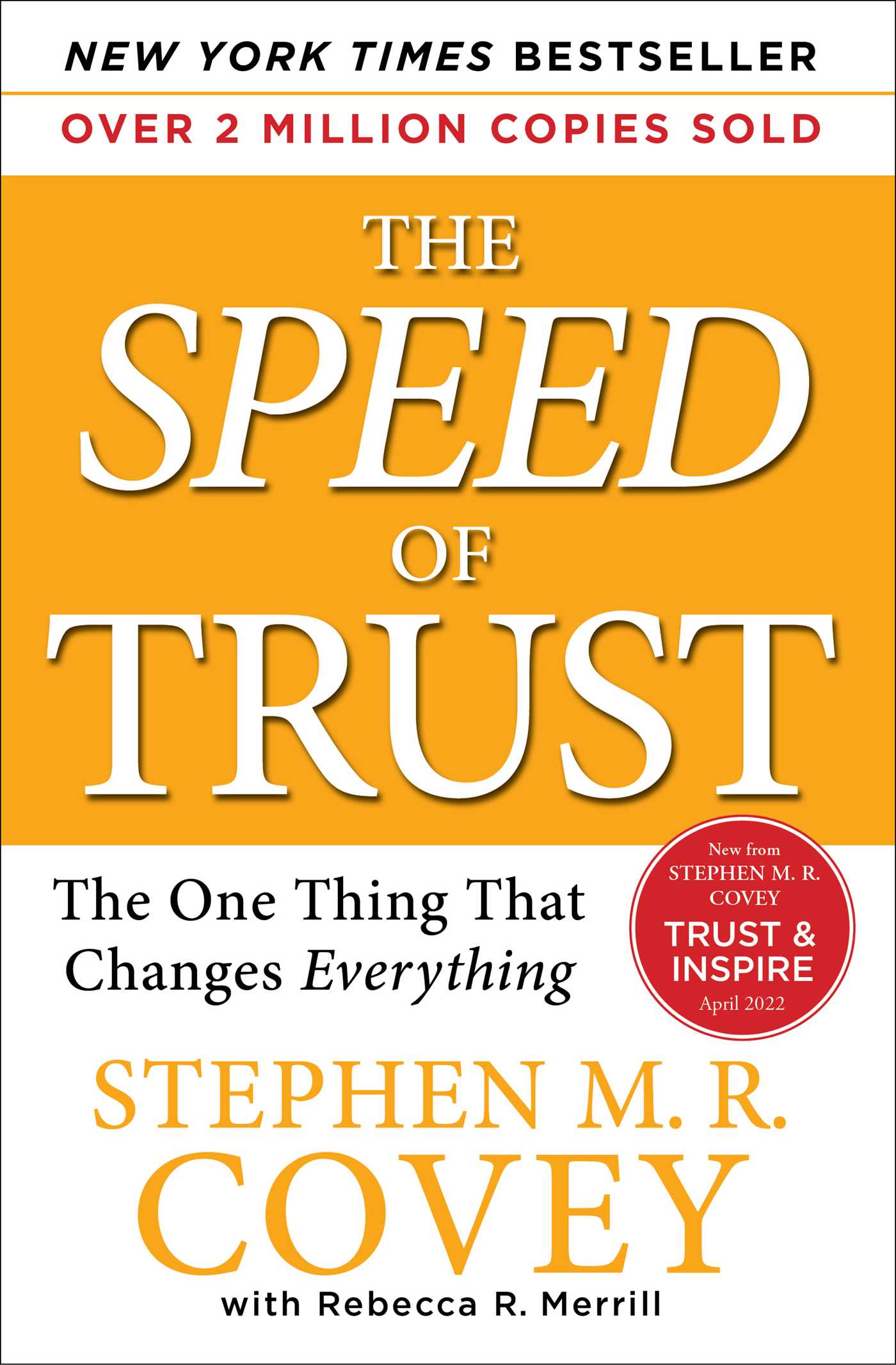
The Speed of Trust: The One Thing That Changes Everything
I picked up The Speed of Trust by Stephen M.R. Covey after seeing it referenced in The 7 Habits of Highly Effective People. Turns out the author is the son of the man who wrote 7 Habits, Stephen R. Covey, and you can feel it. The book is essentially an extension of his father’s work, taking the idea of trust and building a whole framework around it. The book repeats itself a fair amount, but I think that is part of the point. Some ideas only really sink in once you have seen them from five different angles.
The framework I keep coming back to is Covey’s argument that trust has two components, character and competence. We tend to lump them together, but they are different things. I trust my closest friends to keep my secrets, but I would not trust any of them to perform open heart surgery on me. That is a character without competence kind of trust. On the flip side, I might trust a brilliant surgeon I have never met to operate on me without trusting them to babysit my future kids. That is competence without character. Real trust requires both. Once you start looking at relationships through that lens, a lot of the confusion about why some trust falls apart starts to make sense. People often confuse one type of trust for the other and then get blindsided when the type they needed was not the type they had.
One of the things this book did for me was make me realize that I want to be a trustworthy person in both senses: reliable AND competent. And the way you build that reputation is mostly through small things repeated over time. It is so easy to justify blowing off small commitments. “It is just coffee.” “I am only ten minutes late.” “I did not really promise, I just said I would try.” But if someone cannot trust you for something as small as showing up to lunch on time, why would they trust you to do anything bigger? Every small commitment kept is a deposit. Every small one broken is a withdrawal. You are quietly building your reputation either direction, and most people are not paying conscious attention to which way they are trending.
My favorite framing in the book is what Covey calls the trust account, an idea he picked up from his father. With trust, you make tiny deposits over time, but when you mess up it is like a massive withdrawal. People forget the ten times you showed up to a meeting on time, but they remember the one time you blew them off. The asymmetry is brutal. It is the kind of thing that should make anyone serious about their relationships absolutely terrified of breaking a commitment, because the math is not in your favor. You spend a year building credibility, and you can blow it in a single afternoon.
Another idea that stuck with me is the power of extending trust to people, especially to people who have not earned it yet. The famous lawn story his father told in 7 Habits is the cleanest version of this. The senior Covey assigned his young son the lawn, told him exactly what “green and clean” meant, gave him real ownership, and then resisted the urge to take it back when the lawn started to brown. The boy eventually came back asking for help, and his father coached him without taking the job back. By the end of that summer, the lawn was greener than the neighbors’ and the kid was genuinely proud of it. That is the whole point. Real ownership is what produced both the result and the kid’s sense of being capable. If the father had snatched the lawn back at the first sign of trouble, the kid would have learned that his dad did not actually trust him, and probably would have stopped trying. If you want someone to be trustworthy, you sometimes have to extend trust to them first. The son builds on this in his book by pointing out how powerful extending trust can be even with adversaries. Few things win people over faster than treating them as if they are already on your side. It is risky and it does not always work, but when it does work, it works in a way that nothing else does.
Covey also makes the case that trust is not just a soft virtue: it is an economic asset. He cites a Watson Wyatt study showing that high trust organizations outperform low trust organizations by 286 percent in total return to shareholders. The mechanism is simple. When trust is high, you do not need lawyers checking every line of a contract. You do not need three layers of approval before someone can ship a feature. You do not need to verify everything someone tells you. Things just move faster. When trust is low, every transaction has a tax built into it, and that tax adds up. Once you start seeing trust as a measurable performance multiplier rather than a feel-good ideal, it changes how you evaluate teams, companies, and even countries.
The book does repeat itself, and I will not lie, by the end I was ready for it to wrap up. But the core ideas are worth the repetition because they are easy to nod along to and hard to actually live by. Reading this book did not make me a more trustworthy person overnight, but it did make me much more conscious of every small commitment I make and break. That awareness is the first step, and Covey lays out the framework as cleanly as anyone I have read. If you are early in your career, or if you have noticed that the relationships in your life are not as strong as you would like them to be, this is a really useful read. It will help you become the person other people can actually trust.