Honorable Mention
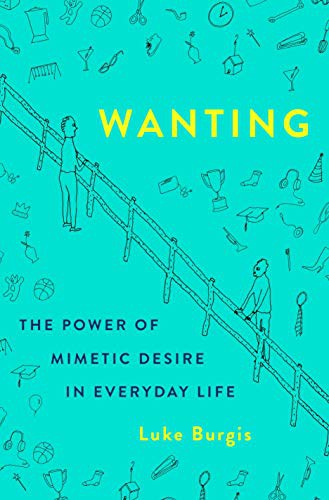
Wanting: The Power of Mimetic Desire in Everyday Life
Wanting: The Power of Mimetic Desire in Everyday Life by Luke Burgis has one of the more interesting premises of any book I have read. How much of what you want is actually yours? That question sounds simple, but the longer you sit with it, the more uncomfortable it gets. It is also one of those questions that psychology and philosophy have been circling for decades, and Burgis takes a real shot at answering it.
The book is built on the work of René Girard, a French academic who developed the theory of mimetic desire in the 1950s. The core claim is that humans do not generate desires independently. We imitate the desires of the people around us, almost always without realizing it. Girard noticed this while teaching literature. He kept seeing characters in novels who never seemed to want anything spontaneously. They always wanted what other characters wanted. He extended this from fiction to real life and built a whole theory around it. The word “mimetic” comes from the Greek word for imitation.
The clearest version of this is something most of us have seen in kids. A child can have a toy sitting in front of him untouched for an hour, but the second another kid picks it up, suddenly that toy is the most important thing in the world. We laugh at this because it is so obvious in a child. But who is to say that adults are any different? We watch each other constantly. We see what our coworkers want, what our friends post, what people we admire are pursuing, and our own wants start drifting in those directions without us ever noticing the drift. The book is full of examples of this in adult life. Fashion trends. Career choices. The neighborhoods people move to. The relationships people pursue. These may not be as freely chosen as we would like to believe.
One thing the book does well is divide the people who shape our desires into two categories. There are distant models, like celebrities, executives, or famous figures, who you watch from a distance and who do not really threaten you. Burgis calls this Celebristan. Then there are the people in your immediate world, your coworkers, your friends, your peers from college, who you are actually in competition with. He calls this Freshmanistan. The Freshmanistan models are the dangerous ones because they trigger real envy and rivalry. You are not jealous of Elon Musk’s net worth in the same way you are jealous of your college roommate’s new job. The proximity is what makes it sting.
The book reminded me a lot of Thinking, Fast and Slow in the sense that both books are about hidden forces shaping decisions we think we are making freely. Daniel Kahneman showed how cognitive biases warp our judgment without our consent. Burgis is making a parallel argument about desire. We think we are choosing what we want, but in reality we are responding to invisible social pressures and just narrating it back to ourselves as autonomy. Girard calls this the Romantic Lie. The belief that we are independent rational agents who generate our own desires. Once you start watching for mimesis in your own life, it is hard to unsee.
The story that stuck with me most was about a chef who had earned Michelin stars and then asked the Michelin Guide to remove his restaurant from consideration. The pressure to maintain the rating was driving him crazy and warping what he actually cared about, which was just making good food for people. He realized that the goal had stopped being his own and had become a goal he was pursuing because everyone in his industry told him he should. Giving up the star was the only way to get his actual desires back. That for me was a powerful example of someone catching mimesis in themselves and choosing to step out of it.
I will be honest about my one struggle with the book. It is very philosophical, and my more analytical brain had a hard time following some of the arguments. Burgis spends a lot of time on Girard’s broader ideas about scapegoating, sacrifice, and religion, which are real parts of Girard’s theory but also start to drift away from the practical applications the title promises. Some chapters felt more like a primer on French philosophy than a guide to thinking about my own wanting. If you are someone who reads philosophy comfortably, this will not bother you. If you are someone who likes concrete arguments with clear takeaways, you may find yourself rereading sections.
That said, the premise of the book is strong enough that I would still recommend it. Even if you only walk away with the core insight that your desires are not as autonomous as you think, that insight is genuinely useful. It makes you a little more skeptical of your own wanting. It makes you ask why you want the things you want, who modeled that desire for you, and whether the goal would still feel like a goal if the people around you stopped caring about it. Most of us have never asked those questions seriously, and we definitely should.
If you have ever felt like you got what you wanted and then felt empty when you got it, this book is probably worth your time. But the bigger question the book leaves you with is harder than that. What happens if we stop wanting things? We no longer have goals, dreams, aspirations. If we stop wanting, are we even human? And if our wants are not really our own to begin with, how much actual autonomy do we have over our own lives? I do not have a clean answer for any of that, and I do not think Burgis does either. But it is the kind of question that lingers, and a book that gets you to sit with a question like that is doing something most books never manage.