Colombia
I went to Medellín for an exchange semester my junior year of college, studying at Universidad EAFIT. There were a few reasons I picked it over the more popular options. Most people I knew were going to Europe or Australia, and I wanted to go somewhere almost no other Purdue students went. The math was on my side. Way more Purdue students went to Spain that year. Five of us went to Colombia. The fewer Americans around, the harder it would be to fall back on English. I also wanted to learn Colombian Spanish specifically, and to actually understand what it meant to be Colombian instead of just being a tourist for a semester. Why take Spanish classes when you can take classes in Spanish?
I stayed in El Poblado, the wealthier and safer part of the city, within walking distance of the university. Medellín is called the city of eternal spring because the weather is essentially perfect year round. One of the first things I did was take a free walking tour, which turned out to be the best possible introduction to the city. A few things stood out. The Spanish colonizers initially passed on Medellín because there was no significant gold there, so the city only started filling up later when people figured out the climate was unbeatable. The tour guide also refused to say Pablo Escobar’s name out loud. He called him “he who shall not be named” because he did not want locals walking past to think he was treating Escobar like a folk hero. Escobar lived in Medellín, and while there is a stubborn legend about him giving money and houses to the poor, the damage he did to the city dwarfs any of that. Medellín was the murder capital of the world during his peak. The fact that Purdue is comfortable sending students there now says everything you need to know about how far the city has come.
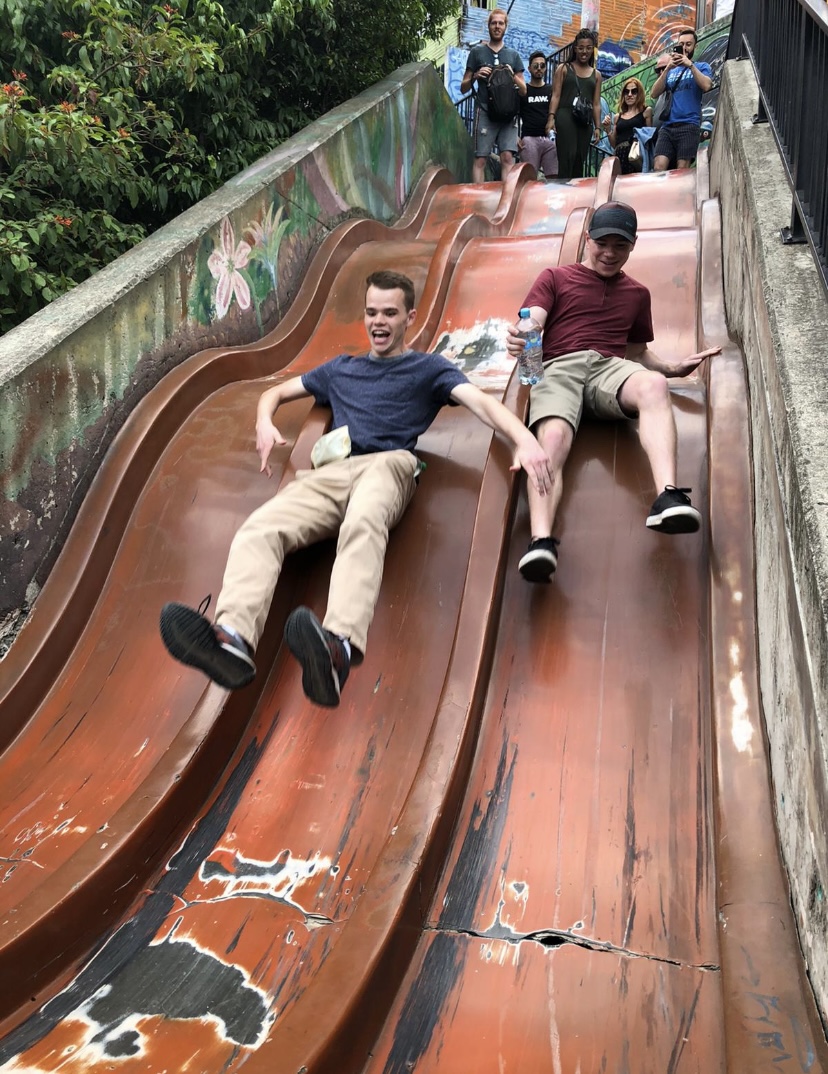
The guide pointed out a few Botero sculptures around the city that are visibly damaged from car bombs during the Escobar era. They were left that way on purpose, as a reminder. What he kept coming back to, though, was the metro. The Medellín metro was finished during all that chaos, and it is a large source of the city’s pride. It is the best public transit system in Latin America. Trains, buses, trams, cable cars all integrated into one system. It is clean, affordable, and you can get pretty much anywhere in the city on a single ticket. Hearing the guide talk about it, I started to understand why people on the metro are quiet, why no one begs or sells things on the trains, why it is so clean, and why it feels different from public transit in most other countries. The only downside is that it shuts down at 11 PM, which means a lot of people just stay out until 4 or 5 AM and catch the first train home.
The mountains around the city are beautiful, and the elevation is high enough that you do not have to worry about malaria or tropical diseases but not so high that altitude sickness kicks in. Medellín has a rainy season, but it is not the gray, all-day-rain pattern you get in the US. It usually rains lightly, and when it rains hard, it does not last long. I think it rained hard maybe two or three times in the time I was there. The downside of being surrounded by mountains is that the air pollution gets trapped in the basin. The city has a system called pico y placa (peak and plate) that restricts which license plates can drive on which days, partly for congestion, partly to manage air quality. The valley shape is also why pollution can hit alert levels during certain months.
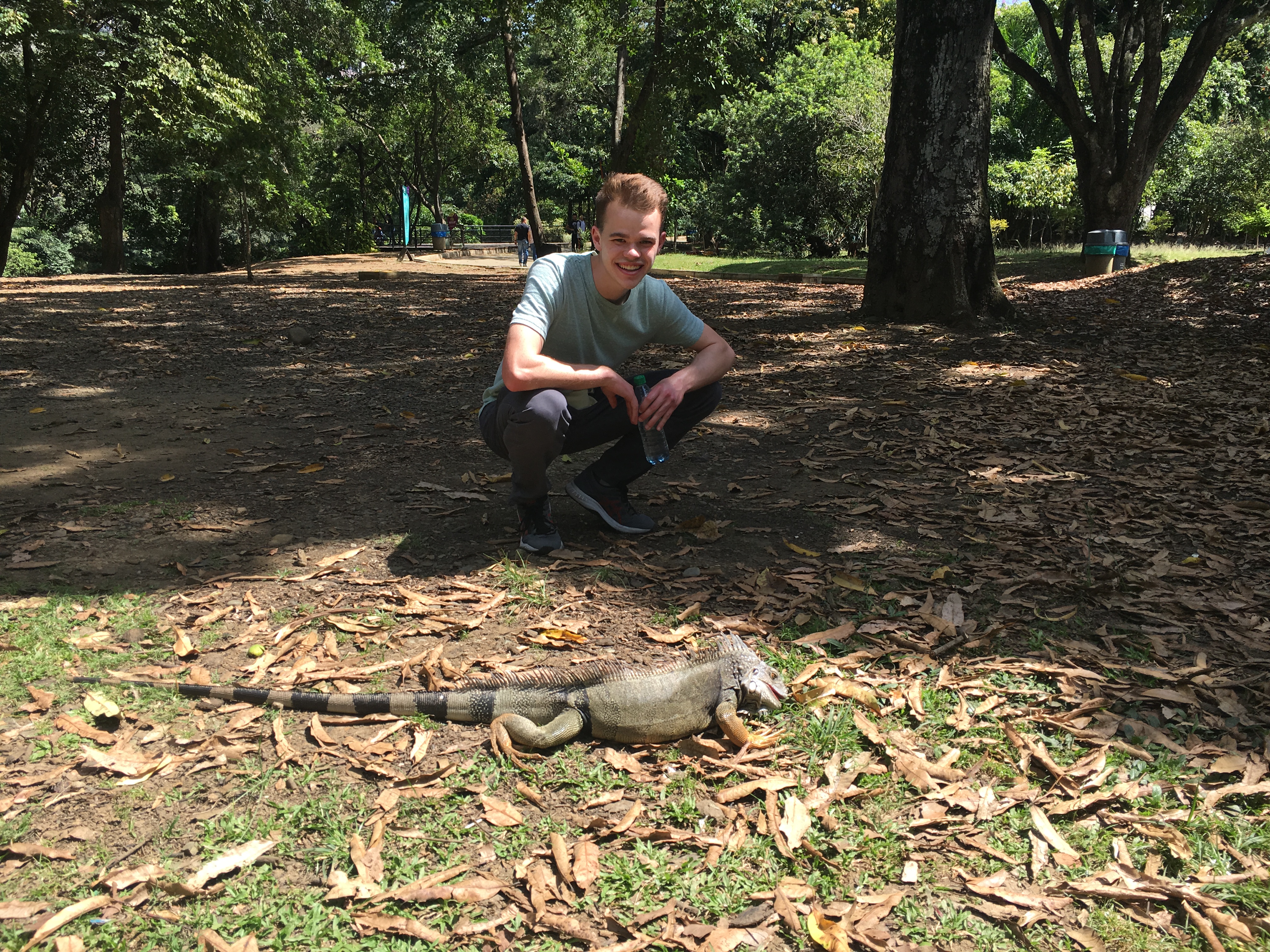
Walking around Medellín, you see Botero’s art everywhere. He makes art of voluminous people and animals. I personally found it a little creepy, especially when I went to his museum. But it does give the city its own visual identity. Past the Botero plaza, there are a lot of other places worth seeing. Comuna 13 used to be one of the most dangerous neighborhoods in the world during the Escobar era and is now a famous transformation story. You can tour it with a local guide, see the outdoor escalators that the city built to connect the hillside neighborhood to the rest of Medellín, and walk through some of the best graffiti art I have ever seen. Plaza Botero downtown is worth a stop. Minorista is a giant indoor market where you can find every kind of Colombian produce, meat, and street food for next to nothing.
The southern parts of the city like Sabaneta and Envigado are also great to visit, generally safer than downtown and easy to get to on the metro. One of my favorite days was when my friend Andrés and I rode the metro cables up to Parque Arví, a huge nature park outside the city. The cables themselves are part of the metro system and they take you straight up the mountain. The park has great hiking trails, food vendors, and a ropes course. The view of Medellín from the cable car going up is one of my favorites.
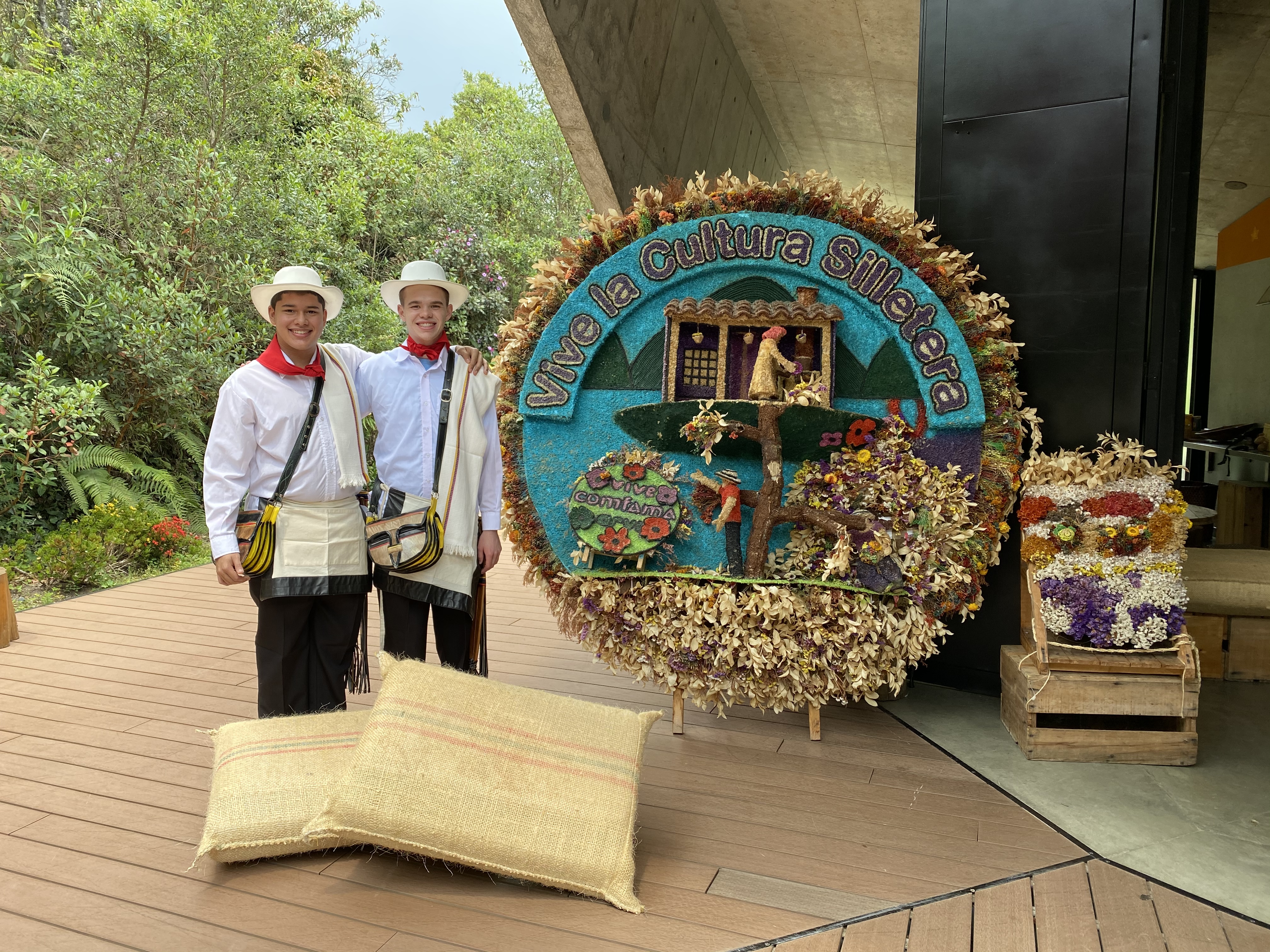
The food in Colombia is genuinely good, and it is incredibly cheap. A solid lunch with a drink ran me $3 to $5, especially if I asked for the menú del día. The classic Colombian dish is the bandeja paisa (paisa platter), which is essentially everything on one plate: rice, beans, chicharrón, ground beef, a fried egg, plantains, avocado, and an arepa. Paisa is what people from the Medellín region (the broader Antioquia department) call themselves. It is both a regional identity and a cultural one, and Medellín is the paisa capital. I also loved Colombian arepas, especially the ones filled with cheese. The fruit was incredible. I learned that you could tell which fruits were native to Colombia by counting the seeds. More seeds, more authentic. My favorite was cherimoya (English speakers call it custard apple). If you go to South America, you have to try it. The mango trees outside my apartment dropped fresh fruit constantly and my neighbor gave me ones he had just picked. One myth to kill: Colombian food is not spicy. Mexicans know spice. Colombians do not. So many times waiters asked if I wanted my food spicy, and I would say sure, and then eat the whole meal wondering where the spice was.
The food situation got even more interesting because of the Venezuelan immigration wave. Venezuela was deep in its political collapse, and Colombians had complicated feelings about it. On one hand, Venezuela helped Colombia significantly during the Escobar years and many Colombians genuinely see Venezuelans as family. On the other hand, Colombian unemployment was already high, and the influx put pressure on jobs and contributed to a real uptick in crime. I heard a lot of mixed opinions. What almost no one disagreed about was that Venezuela itself was now too dangerous for even Colombians to visit. One upside to the situation was Venezuelan food, which is honestly my favorite ethnic food in the whole world. Venezuelan arepas are different from Colombian arepas: bigger, stuffed with all kinds of fillings, almost like a sandwich. There was a Venezuelan restaurant outside my apartment, and the arepa paisa (chicharrón, plantains, cheese, egg, greens, sauce, and more, all crammed into one) is something I have never found anywhere else and is quite frankly unmatched.
I lived in an apartment with five Colombian roommates, but only three really talked to me. Laura, Marisol, and Daniela. Laura and Mari were also EAFIT students. They invited me to gossip hour most nights after dinner, which I came to think of as a secret weapon for learning Spanish. I would sit there listening to them rip through the latest drama, and I would understand maybe 60% of what they said on a good night. On a bad night, the only word I caught was “marica.” (FYI marica is a slur if directed at someone gay. In Colombian Spanish, however, marica has shed most of its slur connotations and just means “dude” or “girl” between friends. Be careful using it.) Some days I would feel pretty good about my Spanish, and then gossip hour would humble me all over again. There are layers to Colombian Spanish comprehension that you do not even know exist until you are sitting at the dinner table with three Colombian women trying to keep up.
The Spanish itself was a fun challenge. The Spanish I had learned in the US was mostly Mexican pronunciation. The biggest Colombian difference is the ll and the y. In Mexican Spanish, ll sounds like a “y” (calle sounds like “ca-yeh”). In paisa Spanish, ll sounds like a “j” (calle sounds more like “ca-jeh”). Same with the y. The city is pronounced “Mede-jeen,” not “Mede-yeen.” When I came home, my Mexican friends told me I came back speaking Spanish like a Colombian. I was proud of that.
Then there was the slang. My EAFIT friends helped me build a slang document on my phone. A lot of those words I cannot put in this review, but they were so fun to learn. Chimba, nea, tusa, teso, parchar, épa. The first time someone asked me “¿qué más?” I genuinely answered “¿más de qué?” because I did not know it just means “what’s up.” Or all the times people told me “tranquilo” and I thought they were telling me to calm down, when it really just means “no worries.” Even the everyday Spanish had levels. I could understand adults speaking directly to me pretty well. Kids, homeless people, women gossiping, people on the phone, or dudes just talking to each other like bros were all separate skill levels. Sometimes I would not understand a Spanish word and assume my Spanish was the problem, only to look it up and realize either I did not know the English equivalent either, or the concept did not exist in the US. At the grocery store they ask if you want to pay in cuotas, which is installments. Not exactly a question you get at Kroger.
I took four classes at EAFIT: engineering economics, materials science, macroeconomics, and heat and mass transfer. All of them except macro were taught in Spanish. Macro was supposed to be in English since it was part of the international business school, but my professor would switch to Spanish for the harder chapters to help everyone understand. My friend Sam and I were the only native English speakers in the room, so the harder chapters were extra hard for us. Fun fact: every EAFIT student has to reach a certain level of English proficiency before they can graduate, regardless of major. It tells you something about how important Colombians (and the world) view English skills.
For the rest of my classes, I was the only non-native Spanish speaker. I had a lighter course load than Purdue, and only two engineering classes, so I had time to actually breathe. I would split my study time roughly in half: half the time on course content and half the time on Spanish vocabulary needed to understand the content. A trick that saved me: a lot of the textbooks at EAFIT were only available in English, so I would read the English chapter first and then sit through the Spanish lecture with the concepts already in my head. It also turned into an unexpected social tool. Classmates would ask how I seemed to know so much, and I would tell them I just read the textbook. Their English was often not strong enough to read it themselves, so I would walk them through chapters. It was a quick way to make friends at a school where I arrived knowing nobody.
The labs were genuinely fun. EAFIT runs them more hands-on than most US universities, and the courses lean project-based instead of exam-heavy, which meant group work, which meant more chances to make friends. My materials lab partner, Jaime, always called me “Even,” and more often he called me “perro” (aka dawg). He also insisted he was helping me learn Spanish, which somehow always ended with me writing every word of the lab report myself. In hindsight, I think he was just being lazy.
Colombia is genuinely diverse in terms of what Colombians look like. Black Colombians, white Colombians, blondes, morenos. But unlike the US, there is not much diversity from immigration outside the Venezuelan wave. Almost everyone you meet is a native Spanish speaker. This caught me off guard, because in the US so many of my high school and college friends were either immigrants or the children of immigrants from places where English was not the first language. In Colombia, almost no one in a classroom has had to learn the language of instruction from scratch. So when you join a group project and your Spanish is a beat behind, the easy assumption is not “this guy is learning the language.” The easy assumption is “this guy is dumb.”
I have a few favorite stories from being underestimated. One time I got a test back in materials class and the classmate next to me looked at my score and asked the professor, in front of everyone, if she had given me a different test. She told him no, and added that I got the score I did because I actually study, unlike him. Another time, in heat and mass transfer, I quietly asked the professor in Spanish what the thickness of a wall in a problem was. He replied loudly in English, “very thin.” The whole class burst out laughing. Looking back, it is one of my funniest memories. In the moment, I was pretty embarrassed.
The wildest one came from my engineering economics exam. The class basically covered applied compound interest, which is simple if you read the book and do the homework. On exam day, the professor announced that the exam would actually be a team exam, that he would assign teams, and that each team would submit one exam. EAFIT exams give you three full hours, which is generous. I spent the first hour finishing the test, and the next two hours trying to convince my teammates, in Spanish, that my answers were right. It took a stack of Excel spreadsheets and a lot of struggle convincing them (math is the one thing I always have to translate in my head, everything else flows naturally now). They eventually accepted my work. We got near-perfect. By the final, those guys were thrilled to be on my team.
I also played on the EAFIT ultimate frisbee team. I was looking for things to do and it sounded fun. I was not great, but I could run around the field and try to catch the disc, and the guys on the team were unbelievably kind to me. Three practices a week, friendships outside of practice, a constant supply of new Colombian slang. One day, practice got rained out and we watched film in a classroom. All the film was in English. Our coach, Yina, turned to me in front of the whole team and asked “Evan, do you understand this?” In my head I am thinking “of course I do, I’m American!” Out loud I politely said “sí.” She replied with an emphatic, encouraging “muy bien.” I love Yina, but that was the moment I realized this entire country thought I was an idiot.
Outside of school and ultimate, I made another set of friends through a local church. The people there were incredible. We would have dinners after services, hang out, and often visit places in the city together on weekends. My friend Santiago invited me over to his place and we would tour different parts of Medellín on the weekends. My friend Adrian would often drive me back to my apartment after service. He is one of the most genuinely kind and selfless people I have ever met, and he was patient with me in a way I really needed at the time.
If you want to make friends, learn a culture, and actually learn a language, the thing that works best is putting yourself out there. You will get laughed at. You will forget words. You will say one thing that means another. You will have to ask people to repeat themselves three times. The good news is that embarrassment is one of the best memorization tools there is. Kids learn fast because they have no shame and constantly make mistakes. The fastest way to learn as an adult is to act more like a kid.
Two cultural things were harder to get used to than the language. Americans have a thousand soft ways to be politically correct in how we talk to each other. Colombians do not have those. My Black teammate Giovanni on the ultimate team was nicknamed negro, and that was just his name on the field, completely normal. People called each other marica constantly without anyone flinching (though again, do not aim it at a gay person). It took me a while to adjust. Colombians do not get offended in the same ways Americans do.
The second big adjustment was time. Colombians, lovingly, are wildly unreliable. If a friend says they will be there at 7, your best estimate is somewhere between 7:30 and 9, and there is maybe a 50/50 chance the plan happens at all. You learn to come ready with a book or some Duolingo lessons. Sometimes people even make plans with you just to not hurt your feelings, without any intent of keeping those plans. I think the looseness around time and commitments connects, at least a bit, to the same political instability that runs through the country. When the system around you does not reliably deliver, you stop putting so much weight on what is supposed to happen in a given moment at a personal level. It is just my theory.
That political instability has deep roots, and the more I learned, the more I understood why the country still struggles. The walking tour talked about FARC, the famous left-wing Marxist guerrilla group, but there were also the ELN (a smaller and still-active far-left group) and the AUC (a coalition of right-wing paramilitary groups). FARC officially demobilized in 2016 after a historic peace deal, but the ELN never signed and is still operating. Colombia has so much rainforest that armed groups can essentially evade the state by hiding in it. One of the ways those groups translate power into permanence is through politics. In smaller towns, they intimidate voters into electing their preferred congressional candidates, who then advocate for the group’s interests at the national level. This is not a fringe phenomenon. The “parapolitics” scandal that broke in 2006 led to dozens of congressmen and governors being convicted of collusion with paramilitary groups, and a paramilitary leader once claimed that around 35% of the 2002 Congress was friendly to his organization. If you cannot enforce the law in your own territory, even a real democracy can rot from the inside. It is one of the biggest reasons Colombia struggles with corruption and has trouble attracting foreign investment today.
That instability also shapes what feels safe and what does not. In the US, big cities are usually more dangerous than the suburbs and small towns. In Colombia, big cities have police, security guards, and infrastructure, and the smaller towns can be more dangerous because the state’s reach is thinner. I met a Colombian guy once who said he was shocked by how American suburbs have no fences, no barbed wire, and no security guards. He took that to mean they were unsafe. In his world, fences and visible security were signs of safety. In the US, the relationship runs the other direction.
The other side of Colombia I want to talk about is the wealth disparity. El Poblado is wealthy by any global standard. Then you go on a barrios transformation tour like the one I took through Moravia, and you see what most of Medellín actually looks like. Moravia was built on a former landfill, which means the fruit grown there is mildly toxic. Most people built their own homes there, and when their kids grow up, they add another story on top. (Colombians do not move out when they get a job. They move out when they get married.) Electrical wires hang everywhere. Laundry hangs on every surface that holds a clothespin. Stray dogs everywhere. The contrast with El Poblado was the starkest income gap I had ever seen, but Moravia has come a long way in violence and education improvements, and listening to a guide from the neighborhood explain that gave me a lot of hope.
The financial system reinforces the gap. Most of the people working in informal jobs in Colombia do not pay income tax. The way the state effectively taxes them is through inflation, which means cash is king and inflation is brutal for anyone holding it. Colombia is heavily cash-based, very few places take credit cards, and the ones that do tack on transaction fees. Even the banks work against you. Bancolombia, one of the largest banks in the country, charges you fees to hold your money, in a country with high inflation. It is essentially another mechanism that keeps poor people poor.
The other consequence of all of this is brain drain. EAFIT is full of brilliant students, and a lot of them sadly leave Colombia. I initialized plenty of people who left after they graduated. Many of them have since moved to North America or Europe. It is one of those things you do not really feel until you are inside it. When the political system, the economy, and the banking system all conspire to limit what is possible, ambitious people leave. Colombia loses a huge amount of its best human capital this way. I am fortunate to know so many great Colombians living in the US. And I now understand just how lucky the US is to have so many of these smart Colombians living and working here.
A few practical things for anyone going. Get the yellow fever vaccine. Colombia records vaccinations in physical little yellow booklets, so bring yours. I got the oral typhoid vaccine in the US, which lasts five years. I got a SIM card with Claro and a Colombian ID called a cédula. The cédula office made me appreciate the Indiana BMV in a way I never thought possible. I waited in a long line to apply, and then waited in another long line to pick it up, and when I got to the counter the woman told me she did not have my ID. I told her to check anyway. She had it. Apartment shopping was also a bit chaotic. I just asked around the university and other exchange students. Living with Colombians ended up being one of the best decisions I made.
The other thing that surprised me about Medellín was the music. The city is the global capital of reggaetón. Loud drum beat, often crude lyrics, and once it gets in your head it does not leave. J Balvin, Maluma, Karol G, Piso 21, Camilo. These are all paisas. I was in Medellín when Bad Bunny dropped YHLQMDLG, and that album was playing in every store, taxi, and bar in the city. It is one of my favorite albums of all time and it brings me back to Medellín every time I hear it. If you want the most paisa song imaginable, listen to “Tusa” by Karol G. Absolute banger.
After about two months in, three different people, on three different occasions, came up to me and told me my Spanish had really improved since they met me. When you are grinding incrementally every day, you do not notice your own progress. Hearing it from people who had watched it happen was one of the best feelings I have ever had. People talk a lot about how great study abroad is. They do not always talk about how hard and lonely it can be. I would walk home from EAFIT after 7 hours of classes on Thursdays with my head spinning. My roommates would ask if I was okay because I could barely get a word out in any language. Hearing people tell me my Spanish had improved meant the world. It felt like all the embarrassment and humility and exhaustion was finally adding up to something. It was the first time in the entire semester where I felt like I was no longer just a foreigner in this city. I was part of it.
A few weeks later, I started hearing about a new virus called COVID-19. I bragged to friends back home that there were a bunch of US cases and zero in Colombia. That aged poorly. I took a weekend trip to Salento, the coffee region. It is beautiful. We did a hike, toured a coffee farm, and relaxed in some natural hot springs.
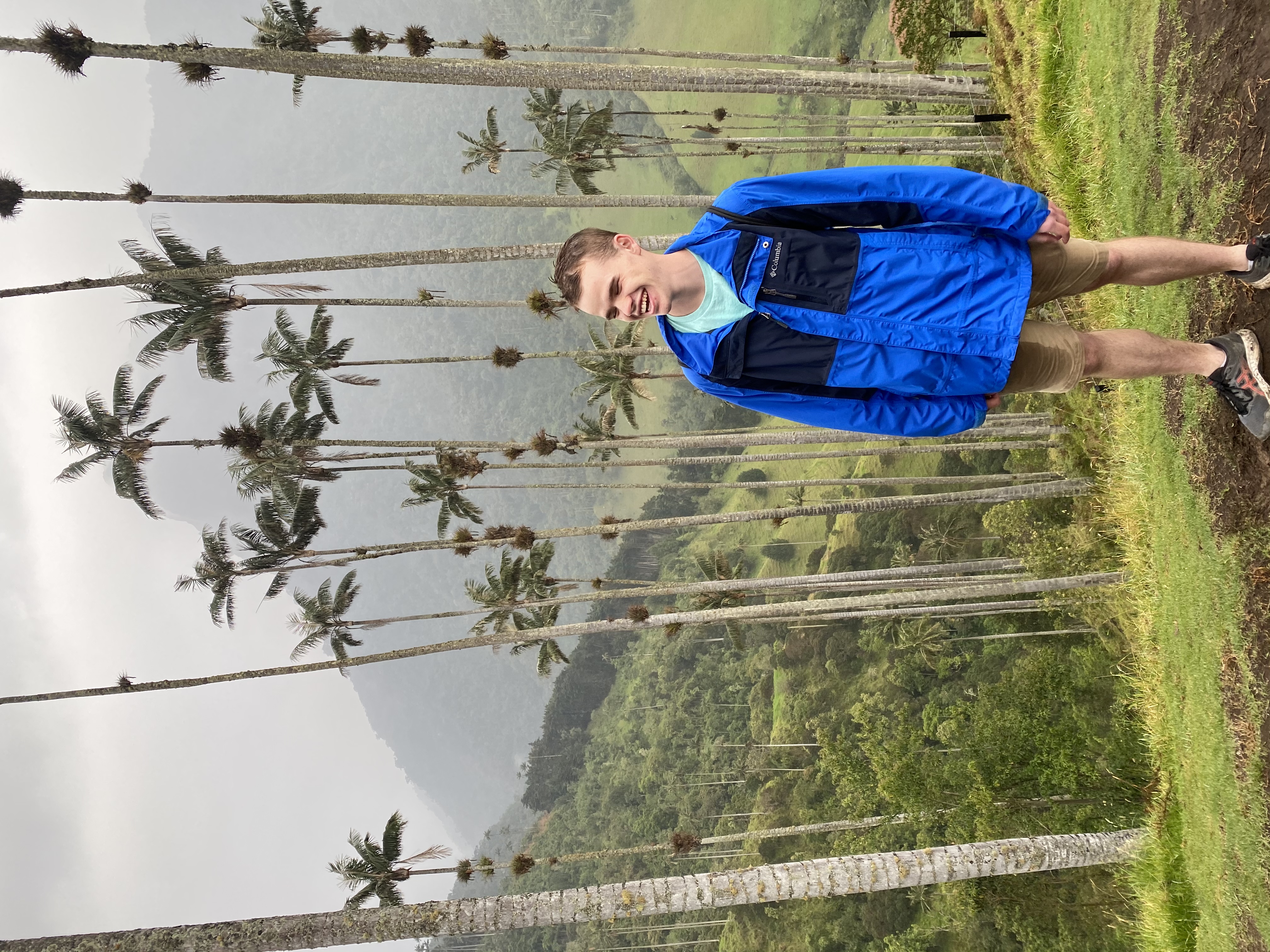
While we were there, EAFIT cancelled classes for the following week, and a couple days later I got the email from Purdue. I had to leave.
I was devastated. The entire point of going to Colombia for me was to actually understand what it meant to be Colombian, and not just be a tourist for a semester. I had put in all this work, met all these people, gotten laughed at in classrooms and on frisbee fields, and I was just starting to feel like I was finally getting somewhere. Just like that, it was all over.
When I get home, my mom told me she was really sorry my study abroad had been cut short. I told her “you’re not sorry, you’re happy I’m home.” She laughed and admitted she was. I finished the semester online and spent the rest of the pandemic with my family. In retrospect, I was really fortunate that I could be with them during that time.
Looking back, the trip was nothing like what I expected, and I got more out of it than I realized at the time. I learned the language. I learned a culture. I made tons of friends. Most importantly, I learned to make the most of however much time you actually get, because you never know when it ends. The semester taught me those lessons on every level, from the day-to-day humility of trying to learn a new language to the moment a global pandemic ended my time there with no warning. Medellín is not the city most people imagine when they hear the name. It is so much better. I want to go back someday, and stay even longer next time.