Germany
In early 2025, I was entertaining the thought of doing a PhD. So I reached out to a professor at the Technical University of Munich (TUM) about an opportunity I had seen online. The professor and his grad students were so kind in their responses that I decided I should actually go visit. I figured if I was flying all the way to Munich for one campus tour, I might as well make a whole trip of it. Two weeks, multiple cities, see the country, meet up with some friends, and figure out by the end whether I was actually going to move there.
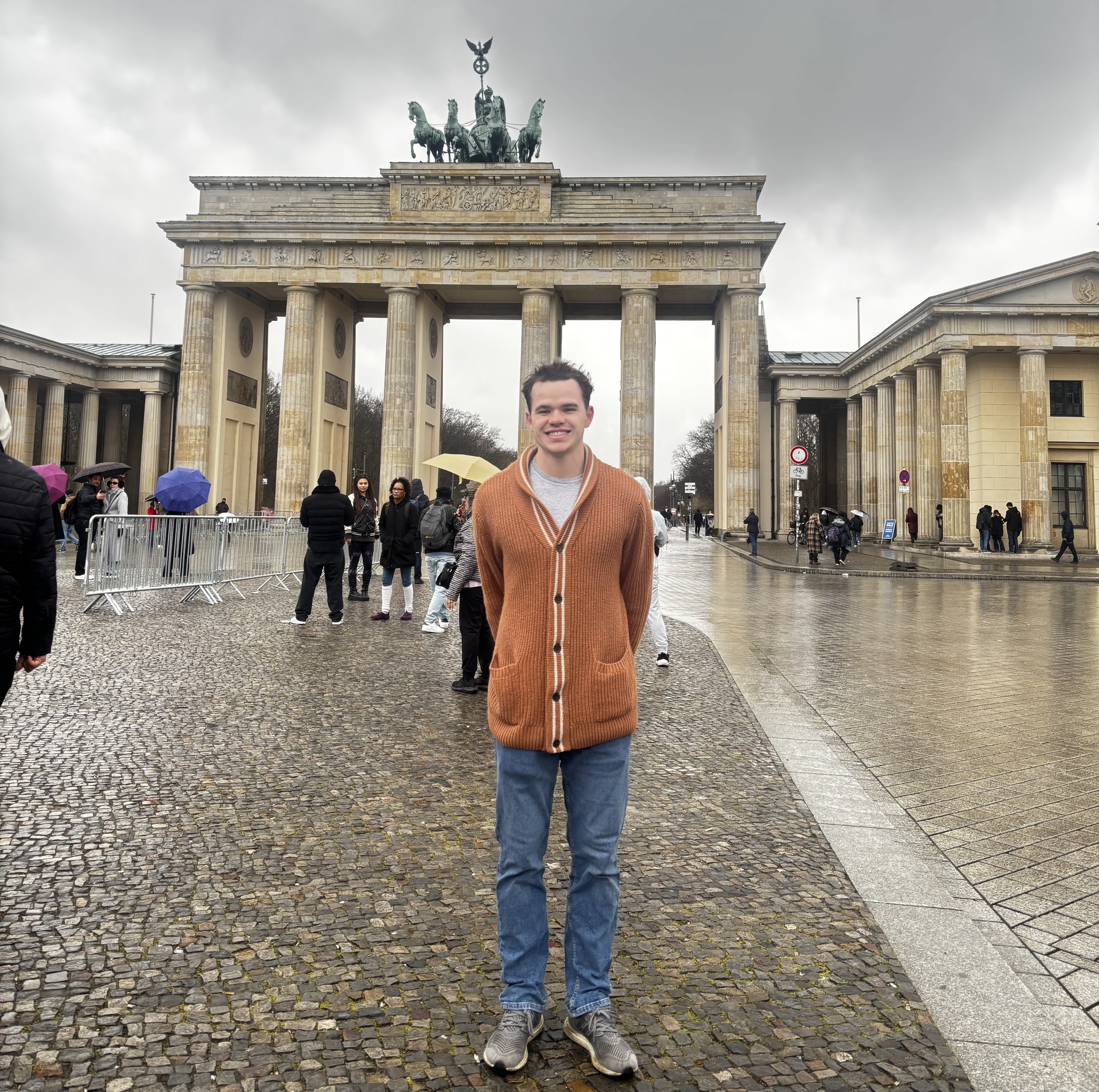
I flew into Munich and had to figure out the best way to get around the country. The best option I found was something called the Deutschland Ticket. The Deutschland Ticket is a monthly subscription pass that gives you unlimited rides on all regional public transportation in Germany: buses, trams, subways, S-Bahn, and regional trains. It does not include the high-speed ICE or IC trains, but it covers basically everything else. As of when I went, it was about 63 euros per month, which is an incredible deal if you are actually going to be traveling. The catch is that it is structured as a subscription. It bills every month until you cancel. You have to cancel by the 10th of the month, and if you miss that deadline, you get billed for another whole month. So the trick for tourists is to buy it for the month you are traveling, and cancel before the 10th of that same month so it does not auto-renew. Make sure you do that step. Otherwise you are subsidizing Deutsche Bahn from across the Atlantic. Some apps (like the HVV Switch app) will prorate your first month if you sign up partway through. One annoying note: when I went, the Deutsche Bahn site was not accepting foreign credit cards, so I had to use PayPal, which gave me a pretty bad exchange rate. The Munich MVV app reportedly does accept foreign cards, so try that first if you go.
Always have your train ticket pulled up and ready, because ticket enforcement is sneakier than you might expect. The ticket can live in your Apple Wallet, so put it there. I was on the S-Bahn one afternoon and an old Asian man who I had assumed was a tourist sat down across from me. A few minutes later he stood up, walked over, and asked to see my ticket. He was a plainclothes inspector. At first I was a little offended, like who does this tourist think he is, before I realized that the whole point of plainclothes enforcement is that you cannot tell. I had my ticket. He nodded and walked away. Lesson: it does not matter what someone looks like or where they sit, the next person who asks for your ticket could be a fare inspector.
One nice thing about having gone to Purdue and worked at a German-based company is that you build up a real network of German friends, either through study abroad programs or through work. I also got a lot of chances to practice my German in the US before going. Sadly for me, most Germans speak much better English than I speak German, especially the young ones. The Germans and the Dutch are remarkable for this (take note, France). Their English is so good that whenever you try to use the local language, they often switch to English mid-sentence. I would recommend pushing through and speaking German anyway because that is the best way to actually learn.
When I got to Munich I met up with my friend Marie, who had been an exchange student at Purdue. She was one of the first Germans who really encouraged me to keep practicing the language, and she let me practice German with her at Purdue. She was now living in Munich finishing her studies and writing her thesis, and she very kindly took a day out to show me around the city. Munich is gorgeous. The old town is dense with Gothic architecture, the public parks (especially the Englischer Garten) are huge and well-maintained, and the whole city is remarkably walkable. Green space in particular stood out. It is rare for a city of this size to have so much accessible, well-kept park land woven into the urban fabric. Marie also told me that Munich has a reputation in Germany for being the bougie part of the country. A lot of wealth concentrates here, and the clothes and jewelry in the shop windows were definitely not in my budget.
The city wears its WWII history visibly if you know where to look. Allied bombing destroyed about 45% of Munich’s buildings, leaving 300,000 people homeless. The Frauenkirche, the famous Gothic cathedral with the twin onion-domed towers, was hit hard. Its roof collapsed, one tower was damaged, and much of the interior was destroyed. The cathedral was rebuilt between 1948 and 1955 with a more austere interior than the original, and if you look closely at the exterior brickwork, you can see where reused, bomb-damaged bricks were worked into the reconstruction. There is also a footprint on the floor of the entrance that, according to local legend, belongs to the devil himself.
We had lunch, and I ordered the käsespätzle (Bavarian cheese noodles). It was excellent and I would highly recommend it. Marie ordered for us in Bavarian German, which I found significantly harder to follow than Duolingo German. The main thing I caught was Servus, which is the Bavarian hello and goodbye. It must have been obvious I was American because the waitress asked me in English if I wanted to leave a tip. In most of Europe tipping is not really expected, but I added a few euros anyway.
One thing I noticed during that lunch is that I was full a lot faster than I would be back home. This is crazy to admit, because I had always been a little proud of my ability to clean my plate (and finish whatever everyone else had not eaten). Suddenly I was getting full halfway through a delicious käsespätzle. What was happening to me. My German friends have complained for years about how the food in America gives them mild stomach discomfort, and I always thought they were just being weak. Now I get it. The amount of processed ingredients in standard American food has a real effect on both the quantity you can eat and the quantity you crave. I now actively try to avoid processed foods, and I trace that habit back to the food I had in Germany. After lunch, I thanked Marie and went back to my hostel to rest.
The next day I met with Ruben, one of the grad students working in the group at TUM that I was considering joining. Ruben was a fantastic host, and the Garching campus was beautifully laid out with great facilities and clearly serious about its engineering programs. The day after, I went to Freising and met with Timo, the professor. Timo was warm, welcoming, and genuinely excited to meet me. I was nervous, and he was very good at easing my nerves. At one point I asked him whether TUM was a public or a private university, since I had done my undergrad at a public university in the US. He laughed. All universities in Germany are public. The lab itself was impressive, doing some literally ground-breaking agricultural engineering with instrumented tractors and other field equipment. His team of grad students were all very sharp. I thanked Timo for the tour, told him I had a lot to think about, and decided I would make my final call on the PhD after I had seen more of the country. That afternoon I checked out the BMW Museum (striking architecture and a hundred-plus years of automotive design without feeling like a corporate brochure), and that night, on the recommendation of my Swiss friend Andy, I went to the Hofbräuhaus München for beer and pretzels. I asked for the smallest beer they had and it was still huge. I do not have a high tolerance for alcohol so I was a bit nervous about getting through it on an empty stomach. I drank it and barely felt it. German beer is apparently not as strong as what I was used to, or my tolerance just decided to behave. Either way, the pretzel was excellent, and the place was as Bavarian as it gets. One thing I noticed in Munich that surprised me was how much Italian I heard in public. The proximity to Italy is closer than you think on a map, and a lot of Italians live and work in the city.
After Munich and TUM, I took an overnight train to Berlin. The Deutschland Ticket does not cover ICE trains, but a fun hack I discovered is that long-distance trains at night are dramatically cheaper than the same routes during the day. I went Munich to Berlin direct, overnight, for about 20 euros, and saved a night at a hostel by sleeping on the train.
The train made several stops on the way north. At one of the early stops, a man sat down across from me and we got to talking. He told me he worked for the German government, which honestly seemed to be the case for half the people I met on the trip. His job was in immigration, and he started comparing German and American immigration politics with me. He laid out a tension he saw in the German system. Under German law, refugees are entitled to basic human rights protections that include financial support from the government during the asylum process. Asylum seekers also generally cannot work for the first several months after arrival, and even after that their labor market access is limited. So you have a population that is receiving taxpayer-funded support while not yet contributing to the workforce. He also noted that the euro is much stronger than the currencies of many of the countries refugees are coming from, so people can send savings back home where it goes a long way, which encourages more immigrants to come. He was not anti-refugee. He was just laying out the structural tension. On one hand, you want to treat people humanely. On the other, you want to be able to advocate for and serve your own citizens. He pointed out that the US at the time was taking a much more blunt and controversial approach to its own version of this question. It was one of the more thoughtful political conversations I had on the trip, partly because the guy was just sketching out the tradeoffs rather than telling me what was right or wrong.
After that conversation, I needed to sleep. The train was mostly empty so I laid across two seats and slept alright. Once I got to Berlin in the morning, the first big thing I did was visit the Berlin Wall and the museum about it. The history hit harder in person than I expected. The wall went up almost overnight in August of 1961, when the East German government sealed the border to stop the flood of people defecting to the West. Up to 1,700 people a day were leaving through Berlin in the months before the wall went up. The night of August 12-13, workers strung barbed wire across the city, and within days a permanent concrete wall was under construction. Families and friends found themselves suddenly on opposite sides with no way to reach each other. Over the 28 years the wall stood, at least 140 people died at the Berlin Wall itself trying to escape, including people who were shot by border guards and others who drowned trying to swim across the Spree River. The total across the entire inner-German border (the longer fortified line that ran across the whole country) was over 600. The first person shot trying to escape, a 24-year-old tailor named Günter Litfin, was killed swimming across a canal just days after the border closed. The wall finally came down in November 1989. Standing there reading those stories really does shift how you think about modern political division.
Berlin was a lot different from Munich. Where Munich is bougie, polished, and orderly, Berlin felt grittier. There was visibly more trash on the ground (wrappers, cigarette butts), the skies were grayer, and everyone was wearing black and dark colors. It is also one of the most diverse cities I have ever been in, with people clearly from all over the world. That is a good sign in its own way. Berlin is a place a lot of people choose to come to.
A big part of that diversity comes from the Turkish community, which goes back to a 1961 labor recruitment agreement between West Germany and Turkey, called the Gastarbeiter (guest worker) program. Post-war Germany had a massive labor shortage, so it signed agreements with Italy, Spain, Greece, Turkey, and others to recruit workers. The Turkish program ended up being by far the largest, and many of the families who came to Germany under it stayed. Today around three million people in Germany trace their roots to that migration, and the cultural footprint is enormous. The most visible result, at least for me, is the doner kebab. The Berlin doner kebab is the best version of this food I have ever had. A massive one, fully loaded and delicious, runs about 7 euros (taxes included, no tip expected). The same thing in Munich is 9 to 10 euros, and you do not even want to know what it costs in Zurich.
One thing in Berlin that surprised me was how many people on the streets were visibly in crisis. There were a lot of people who looked like they were struggling with serious addiction or mental illness. It seemed strange in a country that has a reputation for strong social safety nets. I asked my friend Adrian, who is German, what he thought about it. His thought was that many of these people were dealing with serious mental health issues, often compounded by drug use, and that Germany has not figured out how to help them effectively. Berlin and Frankfurt in particular have struggled immensely with this. Interestingly, Switzerland faced similar issues in the 1980s and 1990s, especially in Zurich, where the open drug scene at Platzspitz Park became internationally infamous. Zurich responded with a four-pillar policy of prevention, therapy, harm reduction, and law enforcement that included heroin-assisted treatment for the most severe cases. By most accounts it worked well. It would be interesting to see Germany apply some of those lessons.
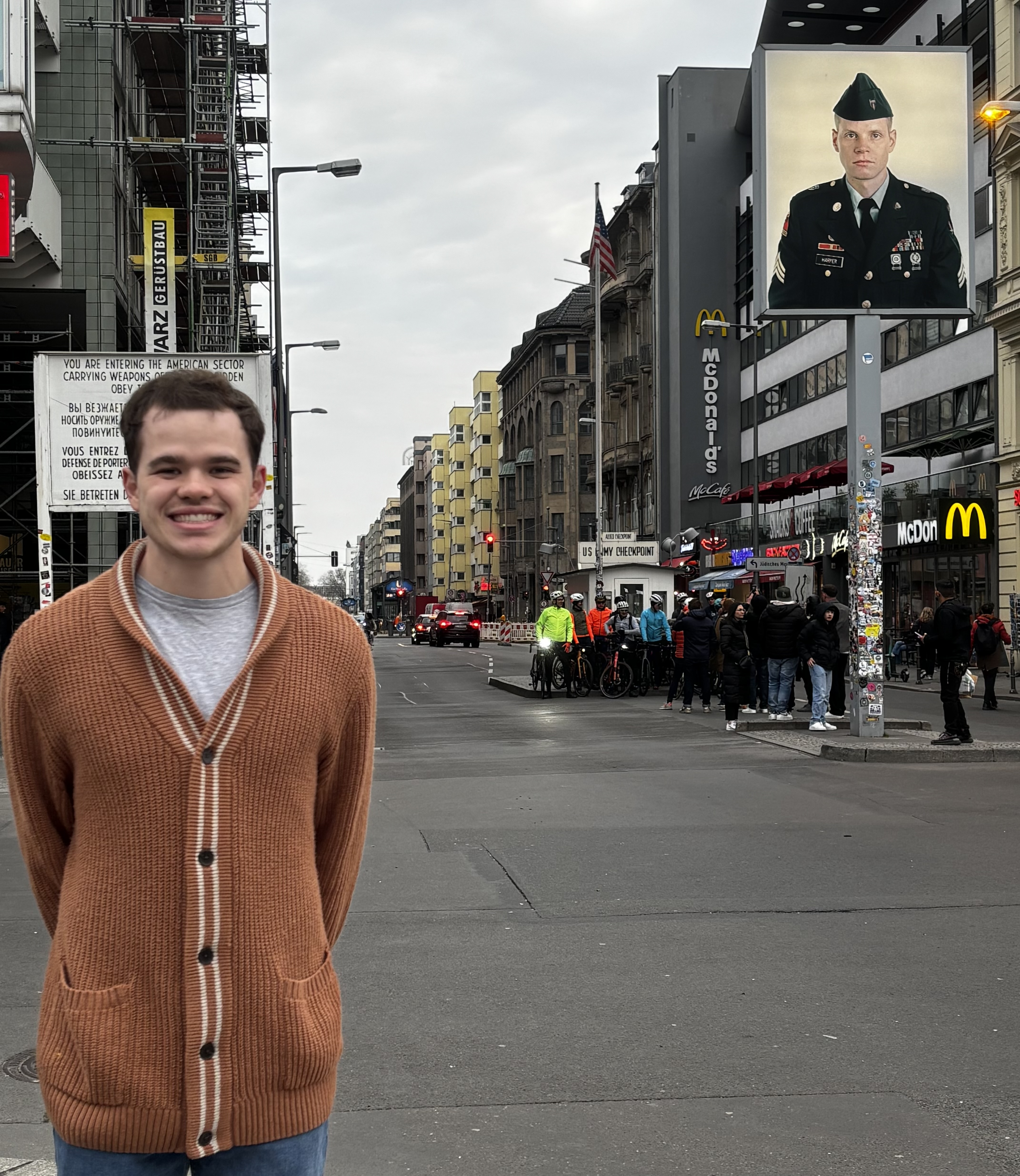
I met up with my other friend Majo, who gave me a fantastic tour of Berlin and introduced me to a bunch of her friends in the city. Majo and I had worked together at ZF, and she had moved to Germany to pursue graduate studies. Her German is excellent and her knowledge of European history is even better. We went to Checkpoint Charlie (the most famous of the Cold War crossing points between East and West Berlin, named because it was the third checkpoint after Alpha and Bravo), the Berlin City Palace, the Topography of Terror (built on the site of the former SS and Gestapo headquarters), the Memorial to the Murdered Jews of Europe (the haunting field of concrete blocks designed by Peter Eisenman), Pariser Platz, and a tour of a preserved East German apartment from the GDR era. I learned more about 20th-century European history in those few days than I had learned in any history class.
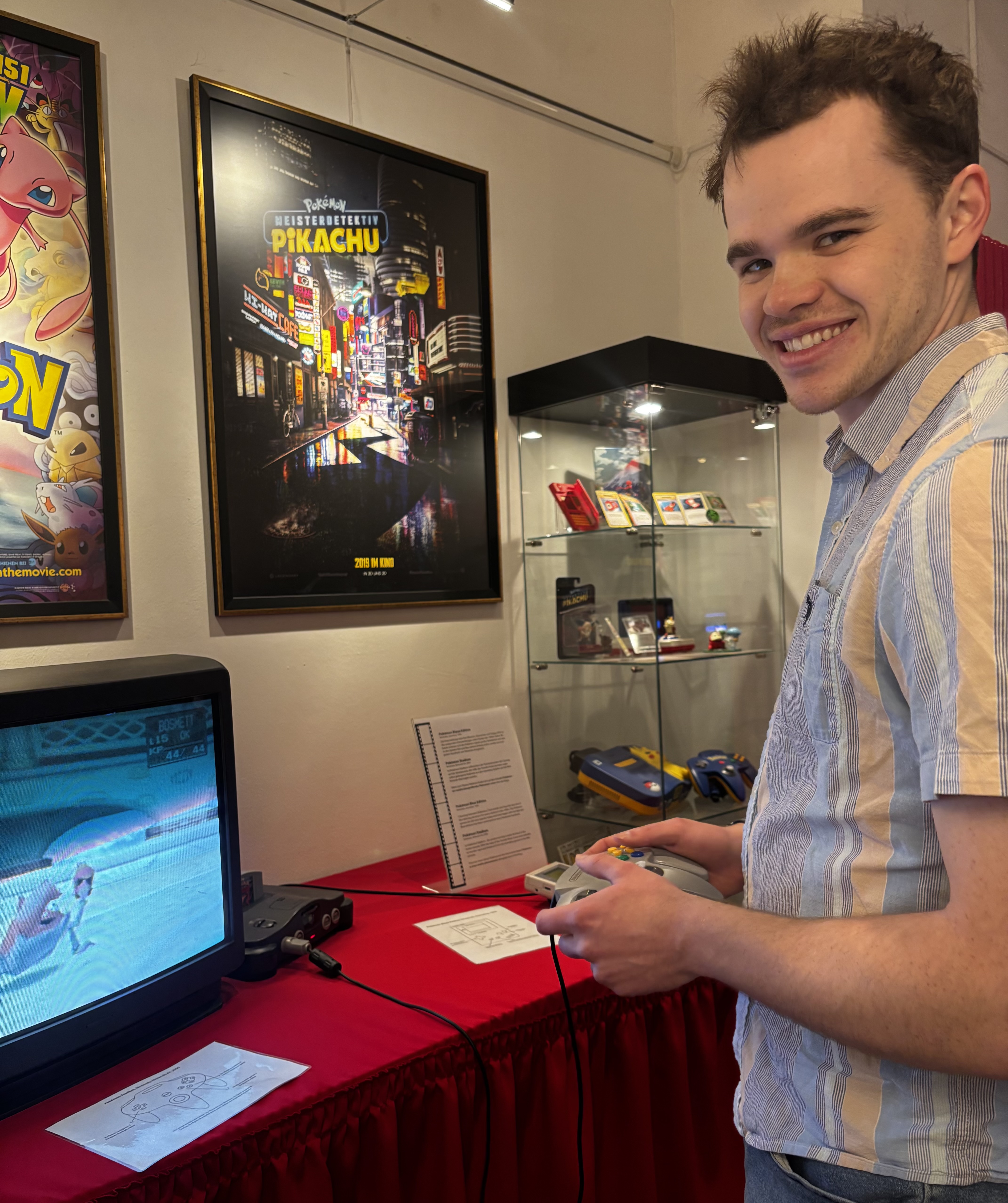
A lot of those sites are emotionally heavy. One thing in Berlin that is just pure fun is the Computerspielemuseum (the Berlin video game museum). Majo, her friend Frieda, and I all went. You pay about 9 euros and it is essentially an all-you-can-play arcade with a curated history of video games from the 1970s on. The most memorable installation is the Pain Station, which is a two-player Pong game where the loser gets physically punished. Depending on the round, you might get a small electric shock, a light whipping on the back of your hand, or a brief heat sensation. You have to keep one hand on the pain pad to play, so quitting means losing. It is exactly as nerve-wracking as it sounds and exactly as fun as it sounds. Highly recommend.
Another fun Berlin recommendation: the Ritter Sport flagship store on Französische Straße. Ritter Sport is one of the famous German chocolate brands, and at the flagship store they sell bags of factory seconds and slightly-off-spec chocolate for huge discounts. We are talking high-quality German chocolate at a fraction of what you would pay at a grocery store. I wish I could have bought more, but I did not want to have to carry so much chocolate with me back to Munich. But you had better believe if my flight home was out of Berlin, I’d be coming back looking like Willy Wonka. This is a must-visit store.
Quick aside: most museums in Germany are either free or very cheap. If a museum costs more than 10 euros it is on the high end. The funding philosophy in Germany treats cultural access as a public good, and it shows.
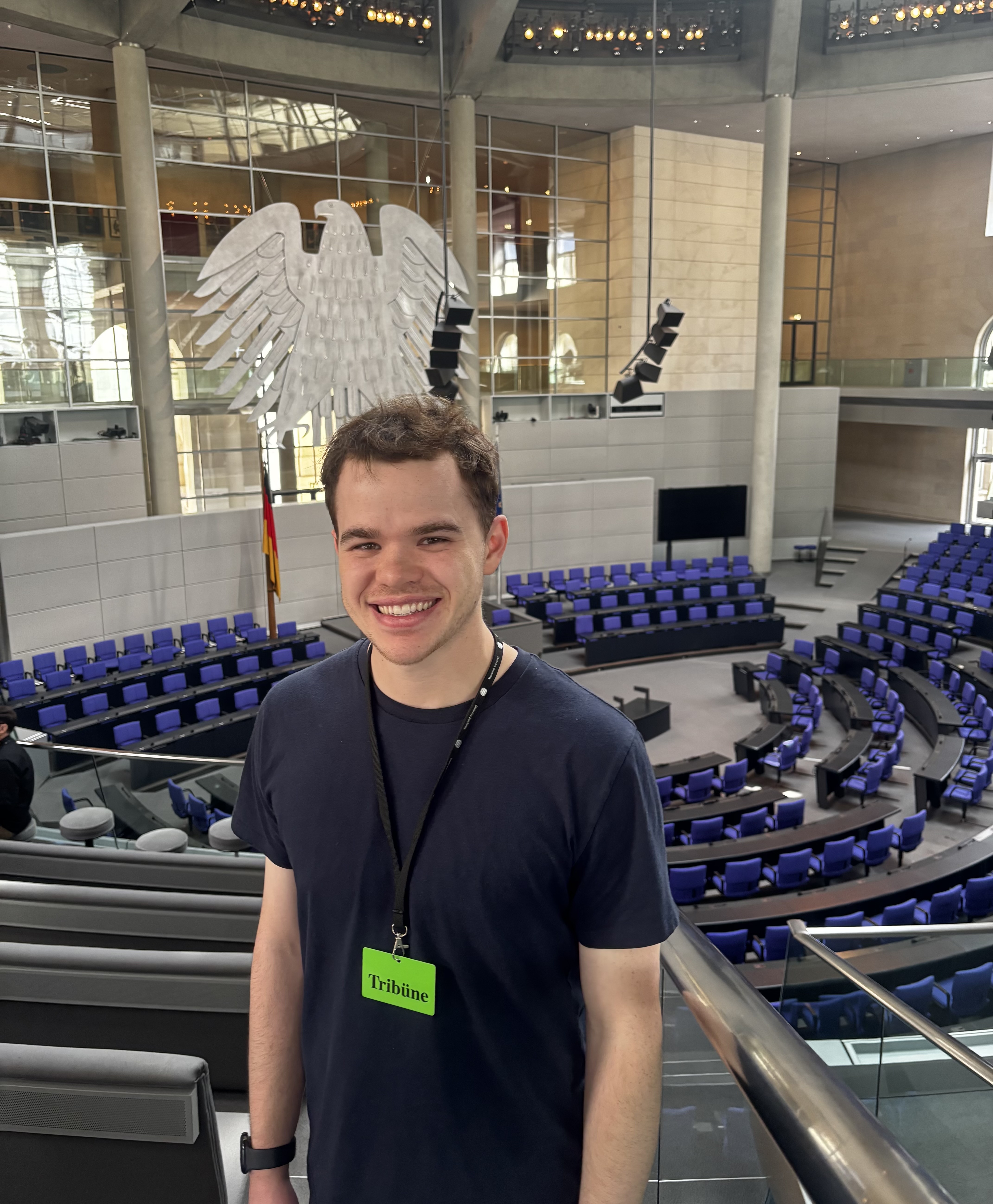
One of the biggest highlights of Berlin was getting to go inside the Reichstag building and stand on top of the dome. The Reichstag is where the Bundestag (the German federal parliament) meets, and you can visit the glass dome and rooftop terrace for free, but you have to register in advance through the official Bundestag website. Slots fill up weeks ahead during the busy season, so book early. The dome itself was designed by the British architect Norman Foster, with a glass floor at the center that looks straight down into the parliamentary chamber. The architectural symbolism is intentional: the public is literally above the government, and the legislators below can see them. The view of Berlin from the rooftop terrace is also incredible.
After a great few days in Berlin, I took another night train back south to Frankfurt. I got there early in the morning. Pro tip: be careful around the Frankfurt train station early in the morning, because the area has a worse drug-and-crisis problem than what I saw in Berlin. I met my German friend Mel from Purdue for breakfast at a bakery and we caught up over fresh pastries.
From Frankfurt I took the train to Stuttgart to meet my German friend Till. I told Till my ETA, and as the trip progressed it kept getting later and later because of delays. By the time I arrived, I was about 45 minutes behind schedule. Till texted me on the way, “I hate that you have to see this side of the DB (Deutsche Bahn).” The legend of German efficiency does not always survive in reality. You get what you pay for with the Deutschland Ticket, I guess.
Till met me at the station and gave me a personal tour of his hometown. Till is one of the smartest people I know. He might honestly speak better English than I do, and he is running his own company in direct competition with SAP. He hosted me kindly, took me out for pizza, and we caught up over lunch. One of the things that surprised me most during that conversation was how invested Till was in the upcoming US presidential election. He was not unusual in this. Many Germans were following American politics closely. What I genuinely respected about Till’s perspective is that he actively tries to consume political information from multiple sides and to understand views he does not initially agree with. That kind of humility about your own positions is rare, and I think it is one of the strongest signs of intelligence I have come across. While we were walking around Stuttgart, I saw a Chinese flag flying alongside the flags of various European nations and the US, and I made a comment that it seemed a little out of place. Till’s response was that the way the US was acting, Germany might end up siding more with China going forward. I honestly could not blame him for thinking that.
The new Stuttgart train station has been under what feels like permanent construction for over a decade, but the rest of the city has the right mix of walkability, architecture, green space, and history to make it feel like a place I could actually live in. I thanked Till for the tour and took the train back to Munich.
The next morning in Munich I took the train to Dachau. Dachau was the first concentration camp the Nazis opened, in March of 1933, just two months after Hitler became chancellor. It became the model that every other Nazi concentration camp was built around. Over its twelve years of operation, more than 200,000 people were imprisoned there, and at least 40,000 of them died. Most of the early prisoners were not Jews but political opponents of the Nazis: communists, socialists, trade unionists, clergy who opposed the regime, and others. Walking through the site today, you can see the Christian memorial chapels along the back wall, built in remembrance of the clergy who died there. Jews started arriving in large numbers after Kristallnacht in November 1938.
The thing that surprised me the most was learning that the gas chamber at Dachau, while it was built and is preserved on site, was never used for mass killings. The Nazis built it as a model for the larger extermination camps that were later built in Poland, but the actual mass gassings happened elsewhere. Most people who died at Dachau died from disease, malnutrition, overwork, beatings, and shootings. About 2,500 prisoners were sent from Dachau to a separate killing center in Austria called Hartheim Castle to be gassed. The horror is not less because the mass gassing did not happen at Dachau itself. It is just a more complicated history than the simplified version most of us were taught in school.
What stayed with me most about Dachau was how recent it is. The camp was in operation within the lifetimes of people I have actually met. When American forces liberated it in late April 1945, they ordered the residents of the nearby town of Dachau to come out and physically see what had happened in the camp on the edge of their community. There is a real debate about how much the local population knew. I think it is fair to say that some of them genuinely did not know. I also think ignorance was not, and is not, an excuse. Standing in the bunkhouses, looking at the cells, walking past the crematorium, you keep being struck by how recently this happened. Eighty years is not long at all.
I came back from Dachau and decided to use the rest of the afternoon to pick up some gifts and souvenirs. This was much harder than I expected because pretty much every retail shop in Munich closes at 5 PM, and many close earlier. I found that Germans take their work-life balance seriously in a way Americans do not. Lots of public holidays, generous PTO, life paced more deliberately. The tradeoff is that the same strong regulatory culture and slower pace that makes life livable also slows down technological and economic progress, and Germany has been visibly struggling with both for the last several years.
Which brought me back to the PhD decision. The more I thought about it, the more I came to realize this position was not for me. Timo had warned me that administrative issues and government approvals could delay my admission by 6 months because I was a non-EU citizen (it had happened to a UK student before me). On top of that, to actually accept the position, I would have to physically sign a paper form and mail it back to Germany. No electronic signatures accepted. None of those were dealbreakers on their own, but they were the leading edge of a much larger pattern of bureaucracy that I would be jumping through for the next 4 to 6 years. A PhD in Germany takes a minimum of 4 years even with a master’s, and more realistically 5 or 6. I did not want to graduate when I was turning 30. But the bigger reason was simpler than any of that. The trip had reminded me how much I had to come home to. The US is not perfect. But I have a great family, great friends, and real opportunities back home. On the flight over, I had been anxious and uncertain about what this opportunity would mean for me. On the flight back, I felt a real sense of peace with my decision.
I had spent a while telling myself maybe the PhD was the right move. Two weeks in Germany convinced me it was not. But the trip was far from a waste. It reminded me how much I had to come home to, and how lucky I am to have friends who would host me on a week’s notice across an ocean. Those friends gave me more than a tour. They gave me a real picture of what life in Europe actually looks like up close. The history sits closer to the surface than I had appreciated. I am glad I went. And I am glad I came back.