Portugal
I started my first real job out of grad school in August of 2023. They gave me 15 days of vacation, but for the first year I had to accrue it, so by the end of the year I had a grand total of 6 days of PTO. I had no idea what to do with them. I had spent so many years operating on a school calendar, where every break was also peak travel season. So the idea of just picking a random week in December and going somewhere felt foreign.
My Swiss colleague Andy kept telling me I needed to get out and travel. I had never really traveled on my own before, and the thought made me nervous. Andy, predictably, kept telling me I needed to go to Switzerland. And I kept telling him I was still saving money, and Switzerland was way outside of my budget.
Then around Thanksgiving, my friend Caleb told me round-trip flights from Indy to Europe were going for $500. I doubted it but when I checked, he was right. I also had a $200 voucher from United that was about to expire from a flight they had botched earlier. So I ended up with a $300 round-trip flight to Europe in December. Pretty sweet.
I wanted to go somewhere I had never been, somewhere I could practice a language I was learning, and somewhere relatively cheap. Portugal checked all three boxes. So I bought the ticket. I guess it was not super believable, because when I told a friend at work I was going to Portugal, she laughed, and said “Portugal, Indiana?” and walked away.
One of my favorite things to do is leave the country without telling anyone. I share my location with enough friends that I always laugh when I get the “why are you here???” texts. I’m pretty sure it took my roommate Joshua 4 days to even notice I was gone.
I flew into Lisbon and stayed for seven days. If I were doing it again with more experience, I would have spent three or four days in Lisbon, hopped on a train, and spent the rest of the week in Porto. But every trip teaches you something, and that is part of the experience.
I had learned Brazilian Portuguese, so the European accent threw me off, especially the way they make the de sound. I could read everything fine and knew enough to order food and haggle with vendors, but the rhythm and the vowels are different enough that it took me extra time to process.
I love taking walking tours in cities I visit, and Lisbon was a great one for it. The city is beautiful, partly because of the azulejos, the painted ceramic tiles you see on the facades of half the buildings. They are not just decorative. The climate is humid enough that tiles hold up better than paint or plaster, which is why they became so popular in the first place. I drank some Portuguese wine while I was there too. The vinho verde, sparkling green wine, was my favorite, and I also enjoyed authentic ginjinha, the sour cherry liqueur they serve in tiny chocolate cups (although the cheap stuff tastes like cough syrup).
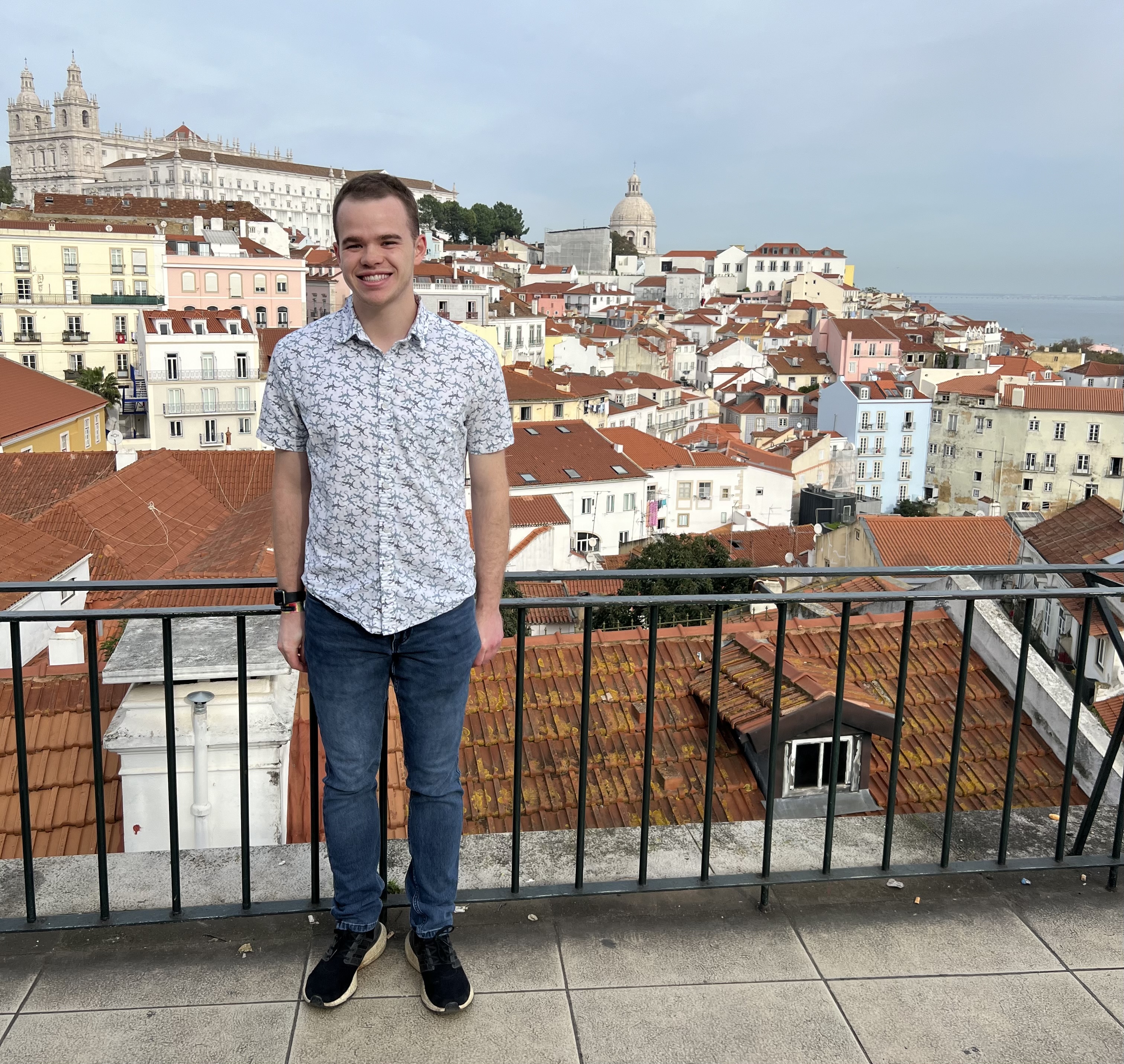
The 1755 earthquake came up a lot on the walking tour I took, and for good reason. The earthquake hit on All Saints’ Day. While the churches were packed for mass, candles toppled into wooden pews and fires broke out across the city. People fled to the waterfront thinking it was safer than the burning streets. The sea pulled back from the harbor first, and the Catholics took it as a sign from God, a kind of miracle for them specifically. Then the tsunami came in and killed them. It is the kind of historical detail that I never forgot.
The earthquake of 1755 is also the reason downtown Lisbon feels more modern than most European old cities. The rebuild, led by the Marquis of Pombal, laid out the Baixa on a strict grid and used an early earthquake-resistant wooden cage system called the gaiola pombalina. They tested it by marching troops around scale models to simulate the shaking. It is basically one of the first examples of modern urban planning in Europe, which is why the downtown feels orderly in a way other cities do not.
I did have to sit with some uncomfortable feelings about gentrification while I was there, and I was definitely part of the problem. Lisbon is the most touristy city I have ever been to. It felt like there were more immigrants and tourists than actual Portuguese people, and every other shop was selling the same magnets and Ronaldo jerseys, run by someone who clearly was not from there. It makes sense in context. Portugal nearly collapsed financially in the early 2010s and leaned hard into attracting foreign investment, foreign residents, and tourism to dig out. The climate is great, the cities are safe and beautiful, and the cost of living is low by European standards. Great place to live, but the corporate tax structure explains why no big company has its HQ there. And the lack of non tourism-based jobs explains why so many Portuguese are leaving.
A lot of Brazilians were trying to immigrate when I was there, mostly through a Sephardic ancestry loophole Portugal opened up in 2015 as a kind of historical reparation for the Inquisition and the forced conversions and expulsions of the late 1400s. For a Brazilian, a Portuguese passport is essentially an EU passport, which means you can work in France or Germany or anywhere else in the EU. Portugal has since started phasing out the program, partly because it had become a backdoor to EU citizenship rather than what it was originally meant to be.
I really liked the Feira da Ladra, literally the thieves’ market. Fun to walk around, mostly locals selling things, and I picked up a few souvenirs there that did not feel like the junk you find everywhere else in the city. Going in December had its own perks. The Christmas markets were genuinely charming, scattered through plazas around the city with mulled wine, roasted chestnuts, and lights strung up over the squares. It was the kind of thing that makes wandering around at night feel like an event in itself.
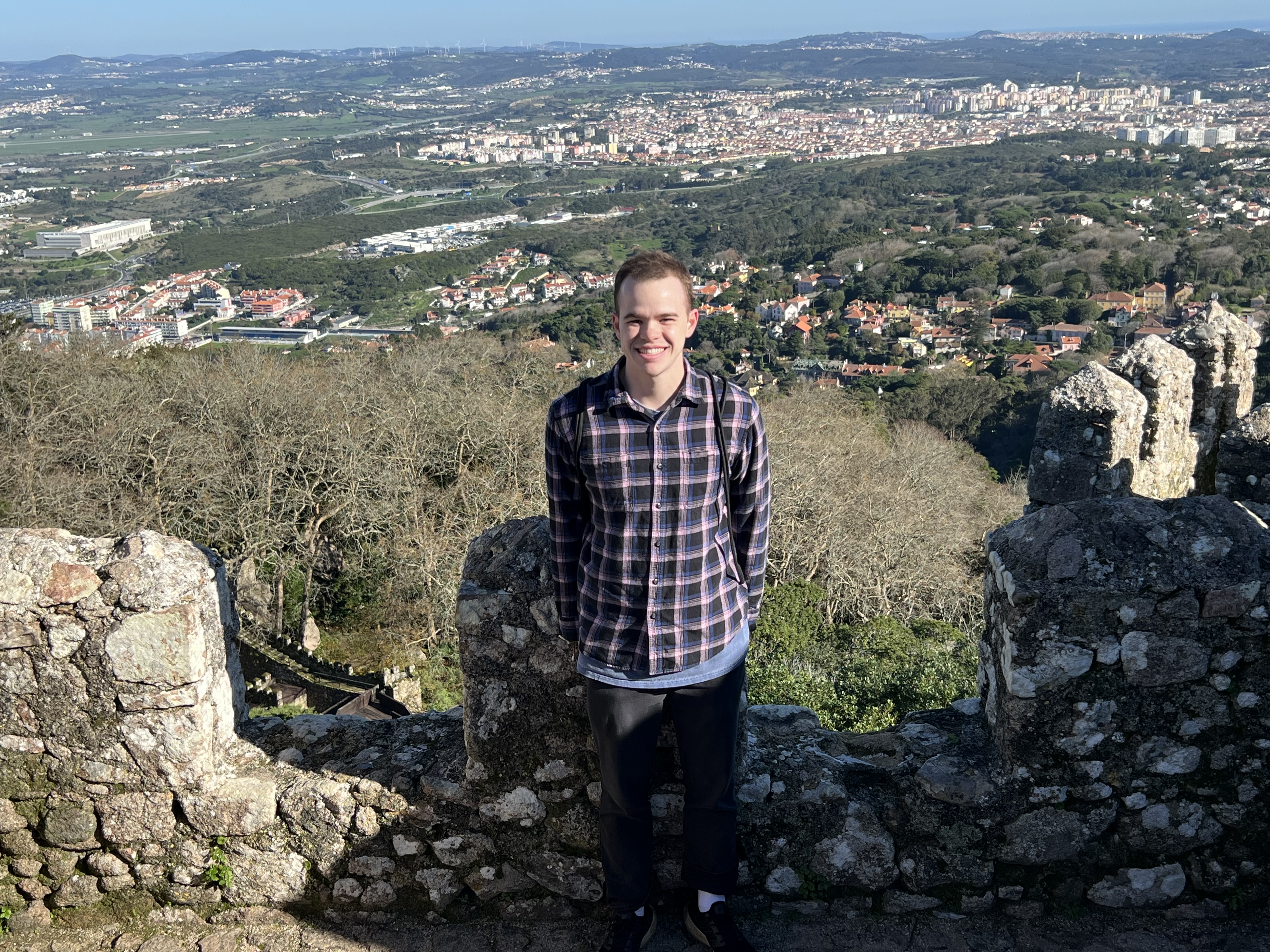
I also took day trips to Sintra and Belém. The pastéis de Belém are supposedly distinct from regular pastéis de nata because the original recipe came from monks at the Jerónimos Monastery next door (they used egg whites to starch their habits and needed something to do with all the leftover yolks). Allegedly only seven people in the world know the actual recipe. I honestly could not taste the difference, but they were still really good. Sintra was also really beautiful. The hike up to the castle is a great way to spend an afternoon, and the castle itself is fun to explore.
Lisbon is also a real party city. I had a great hostel, went to lots of good bars, and made a bunch of friends. Those friends I ended up having dinner with, going out with, or listening to live fado with. Fado is the traditional Portuguese music style, all longing and heartbreak and minor keys, and it is best heard live with a glass of wine.
On the practical side, Portugal is very affordable, which is a big part of why I picked it. I paid about $20 USD per night for a hostel. The city itself is entirely walkable, and the public transit is cheap and easy. One piece of general European travel advice: if you have access to a free bathroom, use it even if you do not have to go. Public restrooms are nearly impossible to find.
A good sit-down meal runs around $15, or about $7 if you grab a döner. Tips are not built into the prices and taxes are already included in what you see on the menu, which is a refreshing change. You can also tell most servers are not working for tips, which leads to fun little moments. At one restaurant I asked my waiter where the bathroom was and he pointed me to the kitchen. I was about to walk in when he started laughing and told me it was actually the other direction.
I also got food poisoning. Probably my own fault for some combination of tap water, cheap pizza, and döner kebabs. I know döner is not Portuguese, but I love a good döner and there were a lot of them around. I did not eat for four days. When I got back, I told Andy I had been sick in Portugal. He looked at me and said that I would not have gotten sick if I had gone to Switzerland. I laughed so hard. I still needed a Swiss friend with a couch I could crash on, because Switzerland was still too expensive. I promised Andy I would get there eventually.
Overall, this was a great first solo trip. There is a lot I would do differently now, but that is the whole point. I always felt safe, I met good people, and I came home with a week’s worth of stories and one bad case of food poisoning. Worth it.