Peru
I had just accepted a new job at SEP and was trying to coordinate a start date. I was on the phone with my dad and said, “What if I asked for a start date that gave me two weeks between the end of my current job and the start of the new one?” My dad did not sound excited. He asked, “What do you want to do, go backpacking in South America?” Actually, yes. That was exactly what I wanted to do.
I wrapped up my job at ZF, moved out of my place in West Lafayette, drove everything down to Westfield, loaded up a backpack, and went.
I got into Lima late and took an Uber to Miraflores, where I spent the night. I woke up extra early the next morning to catch a bus to Paracas. I booked most of my transportation through a company called Peru Hop. Their buses are nice (bathrooms, outlets, reclining seats, a guide), and the bus is structured more like a slow-rolling tourist experience than a standard intercity ride, with planned stops along the way to learn about the country and try different foods. I would recommend them. The only catch is that they will upsell you on excursions, many of which are significantly cheaper if you book them through another agency or just walk in once you arrive. Even the inflated Peru Hop prices are not bad, so it is really just a convenience question.
One thing that caught me off guard about Peru was how much people wanted to be paid by card or in USD. It was often cheaper to pay in dollars than in soles if you did the math. I was used to cash-heavy Guatemala and Colombia and got a bunch of soles from the airport ATM, which I regretted. The exchange rate plus the cash back on my credit card would have saved me a decent amount of money. Lesson learned.
Our guide on the Paracas-bound bus was a guy from Cusco named Bo, and he was incredible. The whole experience felt fun because he was running it. I also got lucky with the people I ended up sharing buses and hostels with. A lot of people I met on the Paracas leg I also ended up bumping into again at multiple stops down the line. By the end of the trip, I had made friends with a loose group of solo backpackers who kept finding each other in all the same towns and hostels. That is one of the underrated pleasures of Peru Hop. You make friends from day one and keep running into them all the way to Cusco.
One of the first things you notice from looking through the bus window in Peru is that many houses are missing roofs. Or upper stories. Or front walls. This is not because people do not know how to finish them. It is because the government taxes property based on completed structures rather than on land. If your house is officially incomplete, you pay much less tax. So people just never finish them, leaving rebar sticking up out of the roof to show that construction is technically still in progress.
The first scheduled stop on the way to Paracas was a place called Hacienda San José, just outside Chincha, and the real reason to visit is the network of secret slave tunnels underneath it. The hacienda was a sugar and cotton plantation built in the late 1600s. Slavery was legal in Peru at the time but slaves were heavily taxed when imported through official ports. So the owners dug a tunnel network connecting the hacienda to the coast, somewhere between 17 and 34 kilometers of underground passages depending on which source you trust, and they smuggled enslaved people inland through them to avoid paying import taxes. At the peak, the hacienda was running about a thousand enslaved laborers, who not only worked the plantation but had to dig and live in the tunnels themselves. The ceilings are about six feet high at their tallest, no light, and almost no oxygen. After Peru abolished slavery in 1854, the tunnels were sealed off and largely forgotten until an earthquake exposed a section by accident. It is one of those places where you feel the history before the guide finishes explaining it.
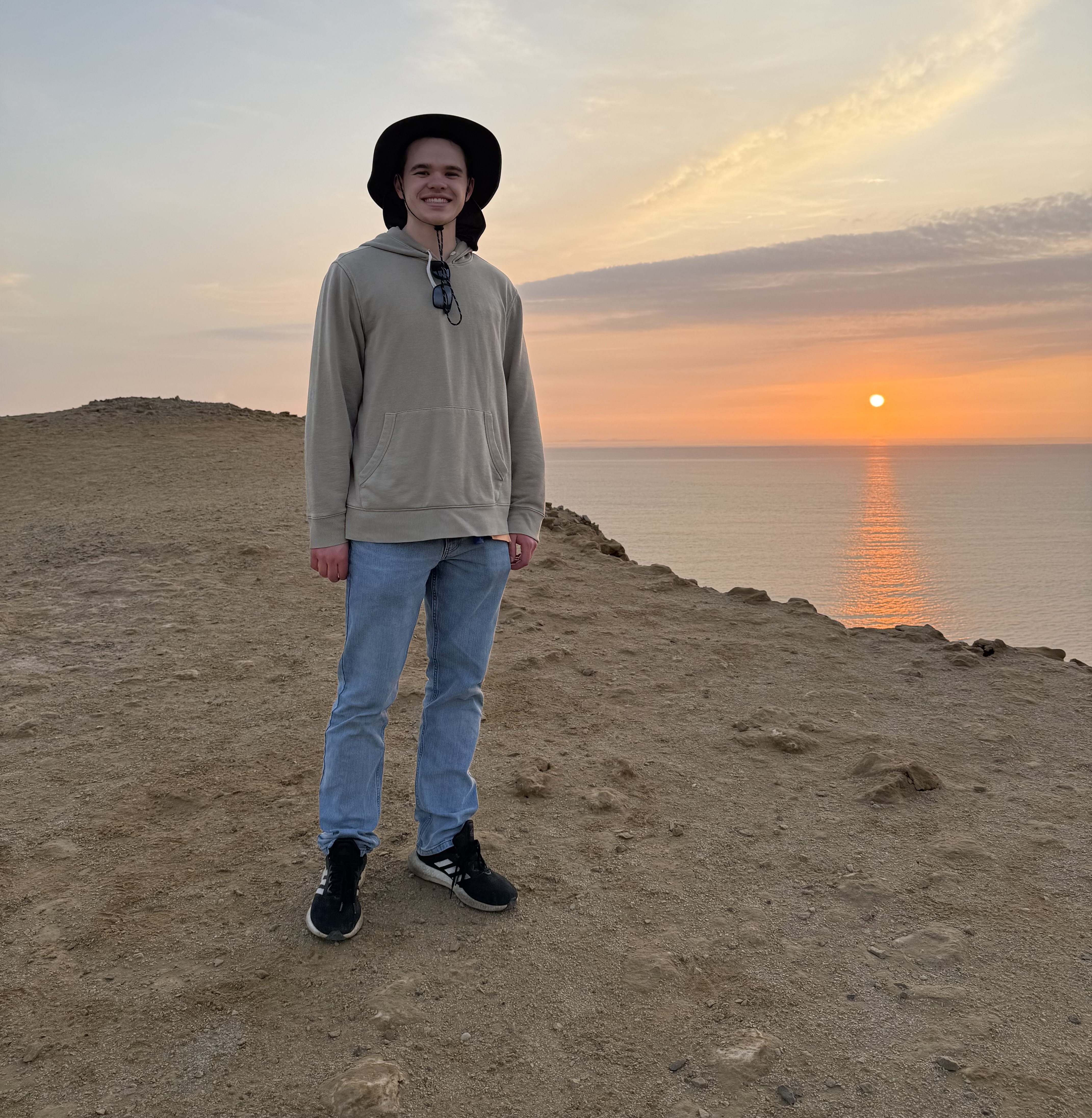
Once we got to Paracas, I took the bus tour of the Paracas National Reserve. People think of South America as rainforest, but Peru also has massive desert. The reserve is just desert and ocean. The Atacama-style sands run straight up to the cliffs and the cliffs drop into the Pacific Ocean. We were there for sunset, and standing on a red-sand cliff watching the sun go down over the Pacific is one of the better travel memories I have.
That night I went back to the hostel and did a Pisco Sour lesson. The Pisco Sour is the national drink of Peru, though Chile also claims it, and the two countries have been arguing about this for two centuries. It is made with pisco (a clear grape brandy), fresh lime juice, simple syrup, egg white, ice, and a few drops of Angostura bitters. The egg white is what gives it the foamy head, and yes, you really do crack a raw egg into a cocktail. The modern version was popularized in Lima in the 1920s by an American bartender named Victor Vaughen Morris, who improvised it for customers who wanted whiskey sours when whiskey ran scarce. The drink is sticky to make and preparing the egg-in-a-cocktail thing is weird the first time you do it. The result is genuinely tasty.
The next morning I took a boat tour of the Ballestas Islands, nicknamed “the Galápagos of Peru.” You see sea lions, red Sally Lightfoot crabs, Humboldt penguins, blue-footed boobies, pelicans, Guanay cormorants, and so many other seabirds that the rocks are white with their droppings. Those droppings are one of the big reasons why the islands are famous. Bird guano accumulated on the Ballestas for so many centuries that the deposits were once 200 feet deep. It turns out that seabird guano is one of the richest natural fertilizers in the world, and in the mid-1800s, before synthetic fertilizers existed, it was effectively Peru’s oil. So much of it was exported that the sale of guano was the single largest source of national income during the 19th century. There was a literal “Guano Era” in Peruvian history, and at one point Peru fought an actual war with Chile over bird droppings. The whole industry only collapsed when a German chemist named Fritz Haber figured out in 1913 how to synthesize fertilizer directly from atmospheric nitrogen. Peru still harvests guano from the Ballestas today, but it is now tightly controlled to protect the birds, and what they do harvest sells for premium prices on the global organic fertilizer market.
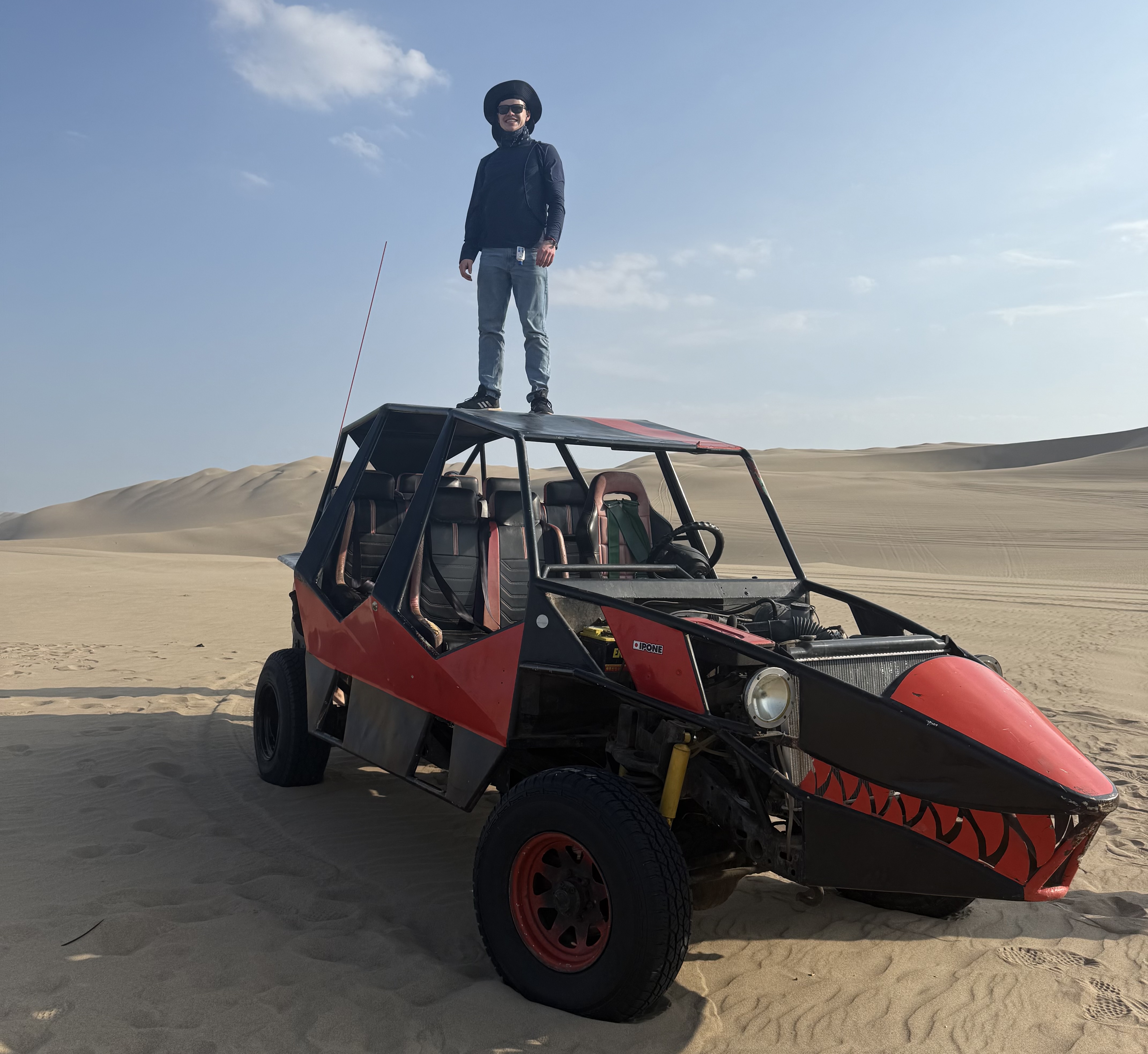
After Paracas we took the short bus ride to Huacachina. Huacachina is a tiny town built around a natural oasis in the middle of giant sand dunes. It is wildly touristy, but the setting alone is worth showing up for. Once you are there, the thing to do is a dune buggy tour. I thought, how wild can a sand buggy be? Our driver drove like a maniac. One second we were sitting idle, and the next second the hat on the head of the person in front of me flew into my face. It felt like riding a roller coaster that had not passed its safety inspection. You think you are driving on flat sand and then the ground falls out from under you because you are now plummeting down a dune. You drive up the side of a dune and look out the window and realize you are inches from rolling over the edge and your heart stops. I am pretty sure none of this would be legal in the US. It was incredibly fun. We also went sandboarding down the dunes, which involves waxing a board and riding it down on your stomach. Highly recommend both.
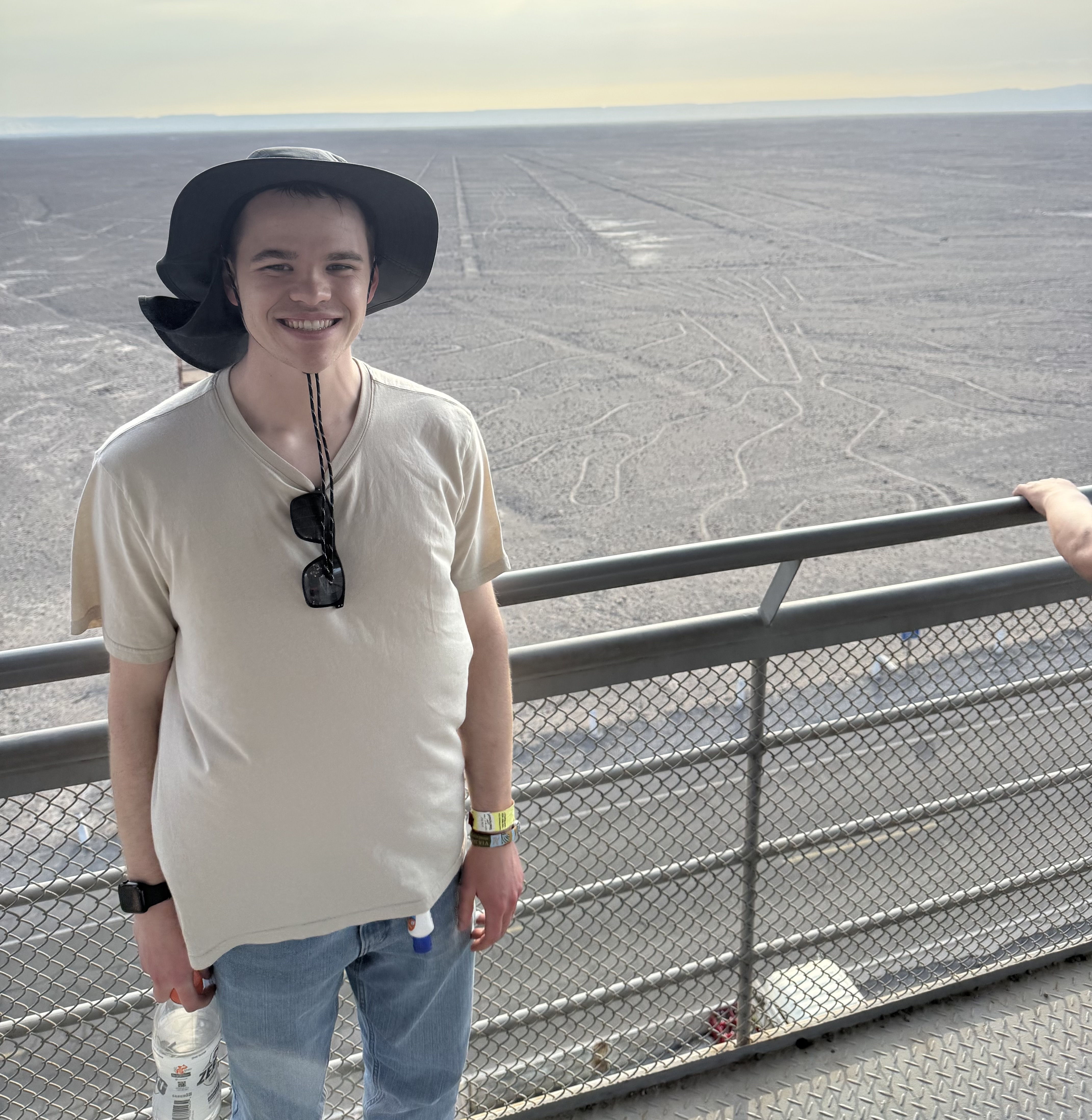
After Huacachina the bus continued toward Nazca. We were already higher than Denver at this point, though it was easy not to notice yet. On the way to Nazca we stopped at a vineyard for a tour and a wine tasting, which meant more Pisco Sours. This is a recurring theme with Peru Hop, that all roads lead to more Pisco Sours. We also got a brief view of the Nazca Lines from a roadside viewing tower. The Nazca Lines are a set of giant geoglyphs carved into the desert floor by the Nazca culture around 2,000 years ago. They depict animals (a hummingbird, a monkey, a spider, a condor), plants, and geometric shapes, some hundreds of feet long. The wild part is that you can really only see them from the air. They have survived this long because the surrounding desert is one of the driest places on Earth and barely sees any wind, so the lines have stayed almost intact for two millennia. No one knows for sure why they were made. The most famous early theory came from a German mathematician named Maria Reiche, who spent more than 40 years living in the desert protecting and mapping the lines, and who believed they were an astronomical calendar. Today most archaeologists think they were more likely tied to religious ceremonies, particularly calling for water. There are also crackpot theories involving aliens.
After Nazca we boarded an overnight bus to Arequipa. I will be honest: it was rough. The roads in Peru are notoriously hard to drive. The mountain routes are narrow switchbacks with sheer drop-offs, weather that turns on a dime, and altitudes that mess with both engines and reaction times. Overnight bus crashes are unfortunately a regular news item in Peru, and the drivers who run these routes need special licensing and a lot of experience. Many companies, including Peru Hop, formally introduce the driver to the passengers before a long overnight leg, like a pilot would. It is treated as a serious and honorable profession because the consequences of getting it wrong are severe. Between the constant turns, the manual transmission, the honking from lane changes gone wrong, and the windy mountain switchbacks, sleep was not really happening. The friends on the bus made it fun though.
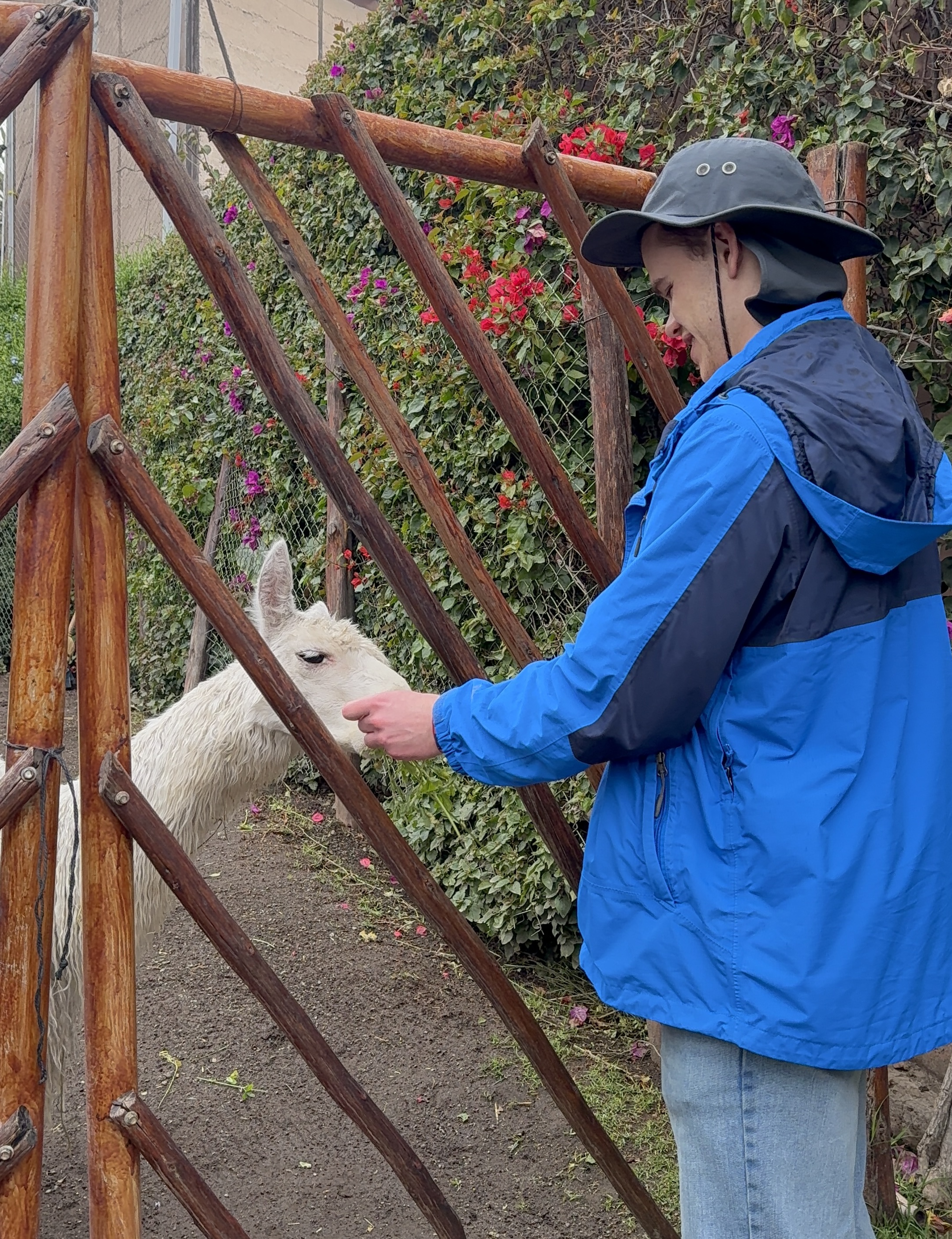
Once in Arequipa, I checked into a hostel, showered, and went out with a group of friends to Mercado San Camilo for a local fruit tasting tour. The best fruit, by far, is cherimoya (English speakers call it custard apple). When you put it into a smoothie, it tastes like a milkshake. After the market we did a walking tour of the old city. I will say this about Peruvian walking tours: most of them are hard to follow because the guides speak unnaturally fast and with a heavy accent (Bo was the exception). I usually went with the English-language groups since most of my friends did not speak Spanish, but I struggled to follow regardless. The biggest upside of the tour was getting to watch Andean people hand-weaving textiles in those wildly bright colors and feeding grass to some llamas.
We signed up for a tour of Colca Canyon the next day. The shuttle picked us up at 3 AM. Some friends I met at the hostel convinced me to stay out at the bars with them until the shuttle came, basically pulling an all-nighter. It was a great night and a regretful morning. I slept a little on the shuttle, but the bumpy roads do not aid sleep. Colca Canyon is the second-largest canyon in South America, twice as deep as the Grand Canyon in some sections. On Google Images, it looks stunning. In person, we did not actually get to see the canyon because of weather. I was a little disappointed. We did go to the natural hot springs at the canyon (which felt incredible), and we saw plenty of llamas and alpacas in the area (I still cannot reliably tell the difference).
The lunch buffet at Colca had guinea pig on it. Guinea pig (called cuy) is a traditional Andean delicacy. I do not eat much meat, but I felt like I should at least try a piece. My idiot self is used to eating uniform cuts of meat like chicken breast or ground beef, so I grabbed a piece off the buffet without really looking at it and brought it back to my seat. My friend Olivia looked at me and said, “Evan, did you see what piece you grabbed?” I flipped it over and saw the teeth and looked closer and could see the eye socket and the little snout. It was the head. The whole head. Olivia was laughing so hard. It was a sign that I was not meant to eat guinea pig. I put my napkin over my plate, said “rest in peace, little guinea pig,” and the waiter came and took it away.
After Colca we headed back to Arequipa and the next day boarded a long bus to Cusco. This is where the elevation starts to hit you. Cusco sits at about 11,150 feet, almost twice the elevation of Denver, and almost a mile higher than Machu Picchu (which is at 7,972 feet). Most people assume Machu Picchu is the high-altitude part of the trip, but it is actually Cusco. The good news is that I had been gradually climbing for several days, from sea level at Paracas up to Arequipa at around 7,600 feet, and that gradual ascent really helps. For me, the only altitude effects were about an hour of nausea on the bus and the sudden need to pee. (At altitude, your body excretes more fluid as part of how it compensates for the thinner air. It is called high-altitude diuresis. Just one of the many ways your body screams at you to go back down.)
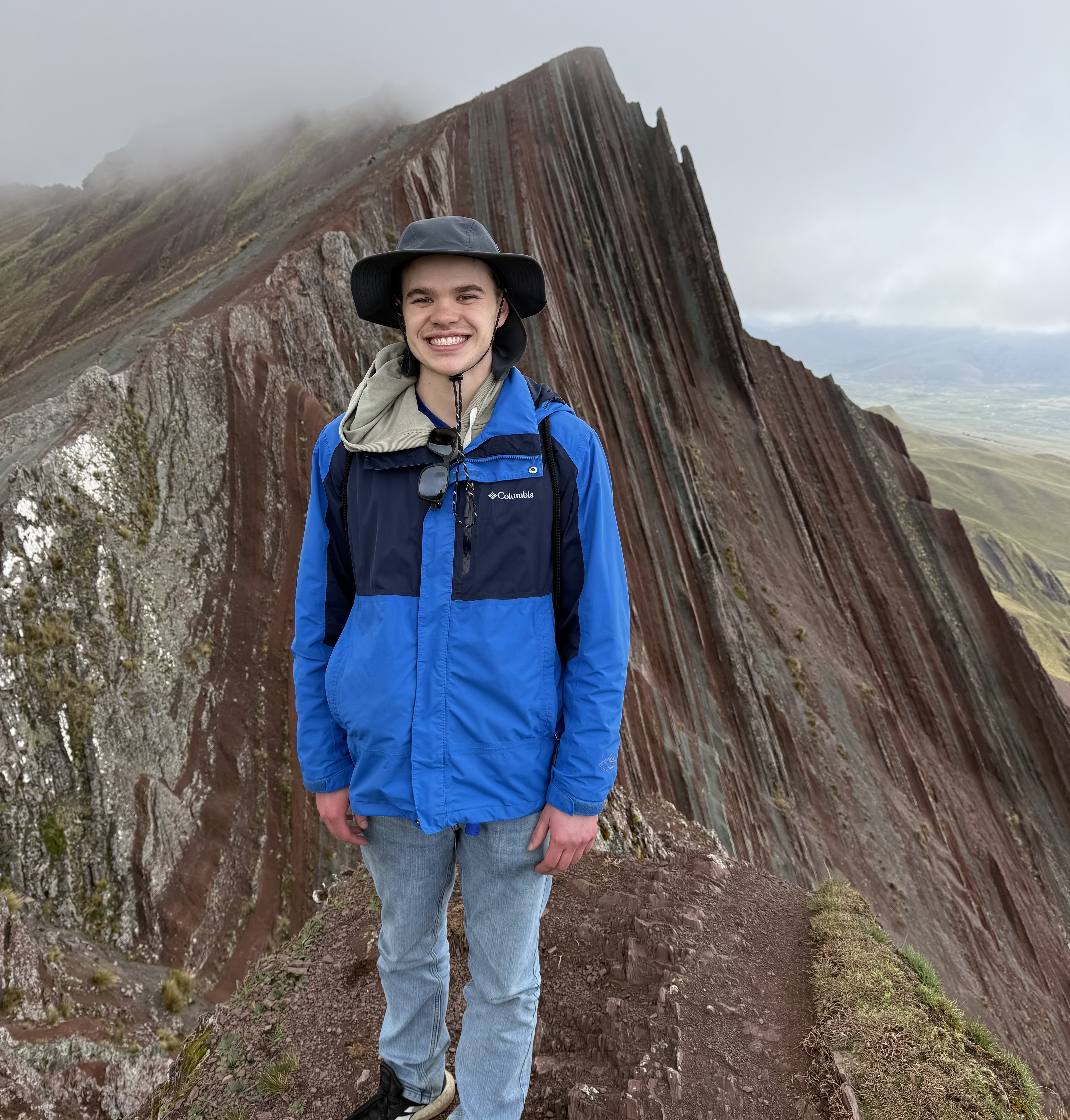
We rolled into Cusco late, grabbed dinner, and planned the next day. Most first-time visitors do Rainbow Mountain, which is the heavily Instagrammed hike outside the city. Some more experienced travelers at the hostel recommended I instead go to Pallay Punchu, a less-famous but very similar site with way fewer crowds. We went to Pallay Punchu, and it did not disappoint. The colors are similar to Rainbow Mountain (red, orange, green, and turquoise layers running down the ridge), but with maybe a tenth of the people. The peak altitude I hit was 15,752 feet. The views were unreal. One word of warning: I saw plenty of tourists getting much closer to the edges than I was comfortable with. These are cliffs where if you fall, that is it. Be smart about your limits.
Back in Cusco the next morning, I finally got to sleep in. Or at least I tried because my body would not let me. I grabbed breakfast with friends and joined a walking tour of the old city. At first I thought Cusco was the gayest city I had ever been to, because pride flags were hanging from what felt like every other building. It turns out that the Cusco flag is a rainbow flag, and it has seven horizontal stripes, while the Pride flag has six. The Cusco flag was actually introduced in 1973 by a local radio station owner and adopted by the city in 1978. The Pride flag was created by Gilbert Baker in 1978 in San Francisco, but the two are not historically connected. Locals can get a little touchy about the comparison, so just call it the Cusco flag and move on.
The walking tour guide also pointed out walls in Cusco where, supposedly, the Incas had hidden animals like pumas, condors, and snakes in the stonework. The guide stopped at one wall on Hatunrumiyoc Street and pointed at a stone he claimed was a snake, with a displaced stone being the eye. I was not buying it. I think someone made a mistake on the wall five hundred years ago and locals retroactively decided it was a snake. I read about this later, and apparently a lot of those “hidden animal” stones along Hatunrumiyoc are modern inventions by local shopkeepers to drive foot traffic past their stores. With that said, there is one Inca-carved animal in Cusco that does look genuine: the Piedra del Puma, a stone in the San Blas plaza that very clearly depicts a puma and is considered authentic. The bigger and more documented animal symbolism is at the city scale. The entire historic center of Cusco was laid out in the shape of a puma, with the Sacsayhuamán fortress as the head. You can still see the outline if you look at a map.
After the walking tour, I boarded a train for Aguas Calientes, the town at the base of Machu Picchu. Fun fact: the only way to reach Machu Picchu is by train. There are no roads in. The Peruvian train itself was a shock after spending so much time on Swiss trains. Halfway through the ride there was a giant thunk, followed by total silence in the cabin. What did we just hit? Are we stranded? The train kept going, but every bump felt more dramatic after that. The bigger anxiety is that the tracks regularly get covered by mudslides, which can strand passengers in Aguas Calientes for days. When I found that out, I got a bit nervous. I had a new job starting on Monday.
Aguas Calientes was not at all what I expected. I had imagined something rustic, in the middle of nowhere, no ATMs, no real food. What I walked into looked more like a hill town in Thailand. Lit-up restaurants, hotels, bars, ATMs, sculptures, TVs everywhere. It is built specifically for the tourist flow into Machu Picchu, and you can feel that.
To get from Aguas Calientes up to the Machu Picchu entrance, you have two options: a $10 bus each way, or a steep uphill hike that takes about an hour. Being cheap and a fan of exercise, I decided to wake up at 4 AM and hike it. The night before, the forecast said the weather would hold. As I started hiking up, it started to pour. By the time I got to the top at 6 AM, I was completely drenched and shivering. I had also already lost noticeable weight that week from a diet I was not used to. A Peruvian grandma standing next to me saw me, touched my stomach, and said “pobrecito, tan delgadito” (poor little thing, so skinny). I told her I was fine. I was not fine. I was also dreading another situation like Colca, where weather had ruined the whole reason for the trip.
Then they let me in, and the whole site opened up below me, and I felt myself tearing up. It was so much more than I had imagined. The terraces, the stonework, the mountains around it, the clouds drifting through the valleys. The whole week had been a steady grind, fun but constant, and I felt that it had all led to this view. The sun came out, my clothes dried, and I walked through the ruins for hours.
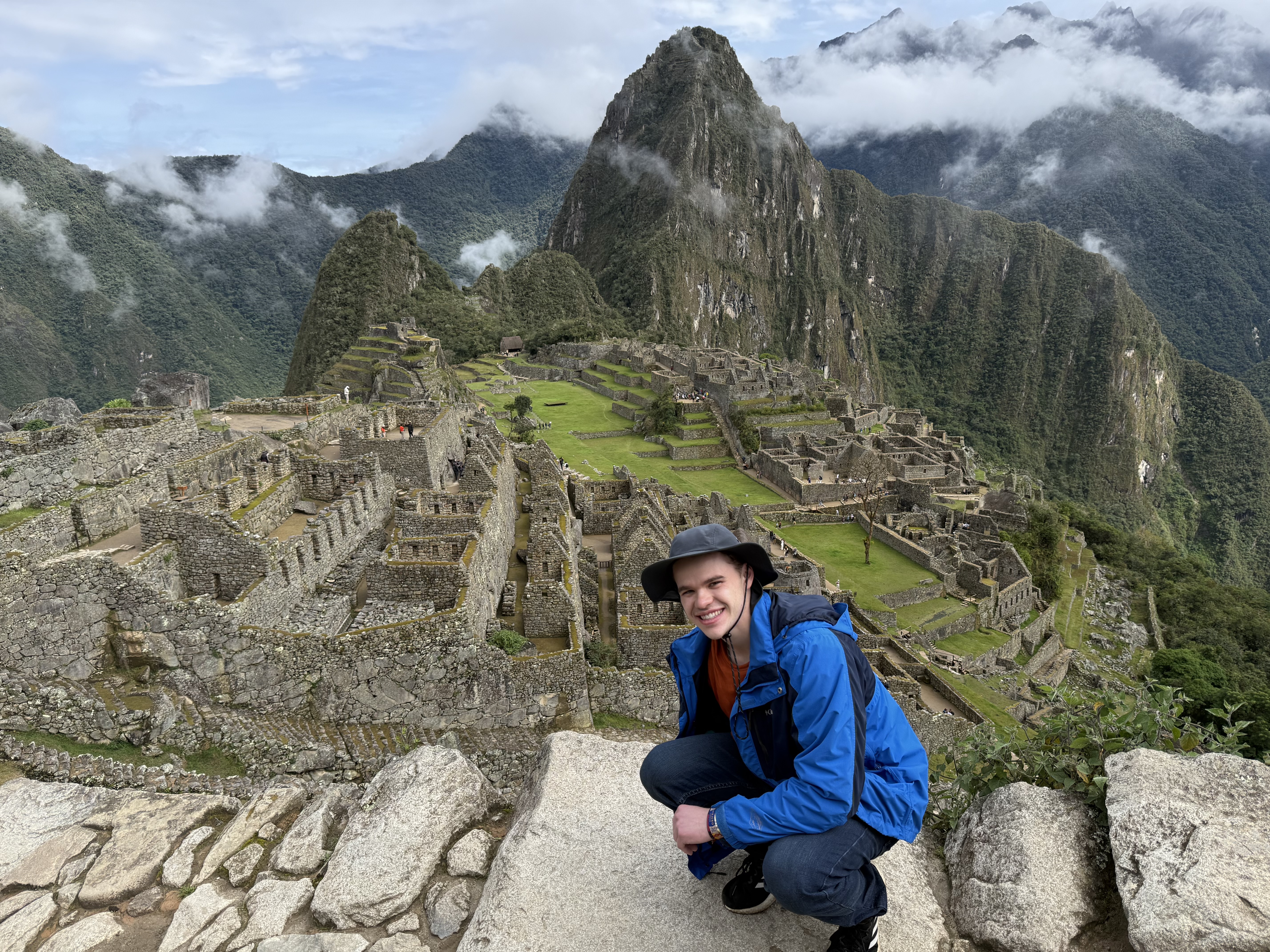
Walking the site, I kept thinking about Inca cosmology, which our walking tour guide back in Cusco had explained. The Incas did not have a Western concept of heaven and hell. Their cosmology had three interconnected worlds: Hanan Pacha (the upper world, where the sky deities lived, represented by the condor), Kay Pacha (the earthly world, where humans and animals lived, represented by the puma), and Ukhu Pacha (the inner world, where the dead and the ancestors lived, represented by the snake). The system was not moralistic. You did not go to one place because you were good or another because you were bad. The whole framework was about balance and reciprocity. The core principle was something called ayni, which roughly translates to mutual support or “today for you, tomorrow for me.” You gave to the earth, and the earth gave back. You honored your ancestors, and they helped you. It is a worldview built on energy and exchange rather than judgment. Standing on the terraces at Machu Picchu, that worldview suddenly felt less abstract. The Incas built this place precisely where the three worlds met, with the condor flying above the peaks, the puma in the city itself, and the snake in the caves and tunnels below. The terraces are not just farming. They are a literal physical mediation between the worlds.
There were also llamas wandering throughout the site, because there are llamas everywhere in this country. The second of seven wonders of the world checked off my list.
One quick note on logistics for anyone planning a Machu Picchu trip. The train tickets and admission together are pricey, around $250 for both. The ticket you want is the Ruta 2-A: Clásico Diseñada, which sells out quickly. If you buy online the day the booking window opens, you can usually grab one. (Claude told me when the booking window opened, and on the day it opened I checked and only 6 AM and 7 AM entries were left. I got 7 AM.) You can also buy in person once you get there, but you may have to plan an extra day in Aguas Calientes, and you are gambling. There are travel agencies in Cusco that handle everything for around $350-400 if you would rather not deal with it. The 2-A route does not include the climb up Huayna Picchu, the famous steep mountain in the background of every Machu Picchu photo. Huayna Picchu only allows about 400 hikers per day, split across two timed entries, and tickets sell out months in advance during peak season. I was so tired by the time I was actually at Machu Picchu that I was not even upset to skip the extreme hike. The train also usually does not allow full luggage, just a small personal item, so leave your big bag at your hostel in Cusco and only bring the essentials for the night in Aguas Calientes.
After Machu Picchu I came back to Cusco. That last night in Cusco was the hardest part of the trip. I had to say goodbye to Olivia, Rene, Jenn, John, Elin, David, Bo, and a handful of other people I had been bouncing in and out of buses and hostels with for two weeks. The last night, a group of us had a few beers, shared fun stories, and had some more laughs before I headed out. If I could have spent more time anywhere in Peru, it would have been Cusco. Two weeks sounds like a lot for one country, but it felt rushed. I would recommend doing three or even four, and building in some rest days.
I caught an early flight from Cusco back to Lima. I bought the cheapest ticket I could find, which turned out to be a mistake. My backpack was designed to North American and European carry-on specs (around 22 by 14 by 9 inches), which has cleared every overhead bin in those regions. South American budget airlines often use smaller specs and tighter weight limits, and mine did not measure up. The crew immediately spotted me as American and asked to measure it. A $50 surcharge later, I was on my flight. Lesson: check the actual airline’s carry-on specs before flying anywhere in South America.
Lima was probably my least favorite stop. The traffic is brutal, and the parts of the city that are walkable and safe (Miraflores, Barranco) felt so gentrified that I was hearing more English and other European languages than Spanish. I stayed at a Viajero hostel in Barranco. The Viajero chain was solid across the four locations I used in Peru, all bookable on the booking.com app. After I checked in, I decided to take a 45-minute nap and accidentally slept seven hours. I woke up at 9 PM. I call that “nap roulette.” Two weeks of adventures finally caught up to me. After I woke up from my nap, I ventured out for dinner and went back to bed.
I did manage to see one really cool thing in Lima before I left. The Puente de la Paz is a new pedestrian bridge that opened in 2025, connecting Miraflores and Barranco over the Armendáriz ravine. It has a glass floor section in the middle that you can walk across and look straight down through to the road below. The bridge is also a good spot to take in how Lima is built on cliffs looking straight out over the Pacific.
Two quick practical notes before I wrap up. First, do not drink the tap water anywhere in Peru. Unlike Colombia where Medellín tap water is fine, Peru’s water infrastructure is old and the water is unsafe for foreigners even in Lima. Stick to bottled. Second, at restaurants, always ask for the menú del día. This is the daily lunch special, usually a soup, a main course, a drink, and sometimes a small dessert, all for a fixed price of $3 to $5. It is almost always authentic, filling, and better than what you would order off the regular menu.
The one thing I wish I had done more of in Peru is talk to actual Peruvians. I saw a ton of the country, but Peru Hop and the Machu Picchu route both run through heavily touristy corridors, and you do not naturally end up in many long conversations with locals. I came home with a fuller mental map of Peru than I had before, but not as deep an understanding of Peruvians as I would have liked. Hopefully this trip opens the door to more conversations with Peruvians I meet in the US.
Most of what I learned about Peru I did not learn from a textbook or a museum. I learned in the back of a Peru Hop bus listening to our Peruvian guide and other twenty-somethings figure out the next move. I learned while looking down a valley at 15,752 feet that I had hiked up with strangers who I now consider real friends. I learned while standing in the rain at the Machu Picchu gate, cold and underweight, hoping the clouds would lift and the dreary weather would stop. It did. It almost always does, in my experience, if you are willing to do things like wake up at 4 AM and walk uphill through the rain to get there. Two weeks between jobs is one of the best things I have ever bought myself. I would recommend it. I would also highly recommend Peru.
I also made a vlog of the trip. It is rough since it was my first attempt at something like this, but if you want to see what the trip actually looked like, you can watch it here.